MVP, Play-Testing and Mechanix
|
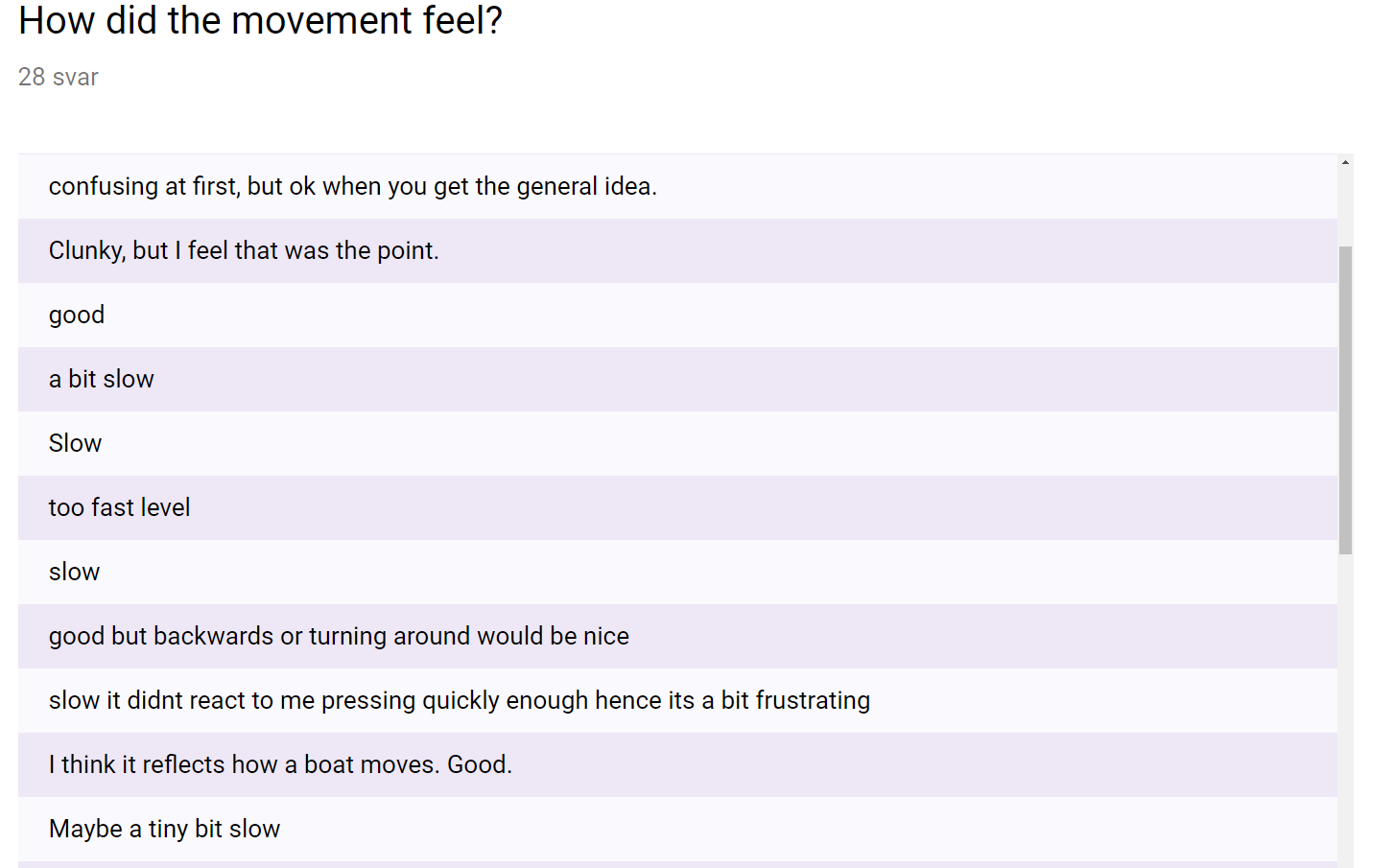
Playtesting has impacted our development process in different ways and has stressed the importance of building towards a MVP. For the playtesting sessions, we had set up a computer with our game, Umibozu, and after playing the game a survey followed. Naturally, we already had some idea of what the players were going to point out but many things can still be learned from it. For instance, a lot can also be learned from the player does while playing the game, for instance how and to what they immediately respond to as according to the video found here: https://www.youtube.com/watch?v=on7endO4lPY (1:50). In Umibozu, the player controls a ship and will therefore spend a lot of time moving it on the screen. Our group knew this, so we made sure to get a lot of feedback relating to how it felt just moving the boat. The responses revealed that most players felt it was too slow. This was to be expected, as we had originally planned to emulate a ‘realistic’ movement which would be slow and not very agile. Some players did pick up on this, but to the majority it did not seem like it contributed to the ‘fun’ of the game as they add that it felt frustrating, clunky, restricted or awkward. These responses told us that we definitely had to change the movement, which has been done since the first session, and judging by the second play-testing, it didn’t seem as important to the players to point the movement out in particular.
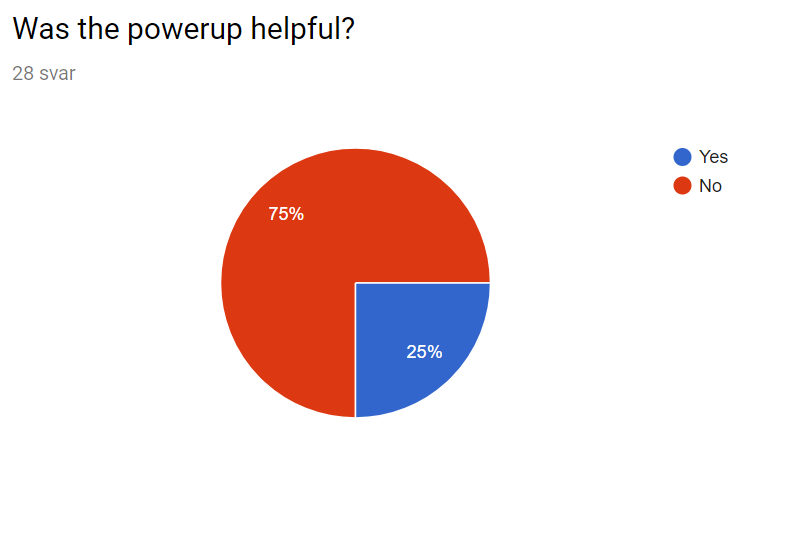
Other elements that were important to test include the power-ups and the floodlight. Since the player will also spend a lot of time searching for enemies and distinguish between helpful power-ups and dangerous enemies, it was important to make sure these mechanics contributed to the players’ experience. However, it appeared that most people did not find the floodlight helpful, and that only few found the powerup relevant, some added that they did not even realize there was a power-up. These responses make sense because we noticed that many players simply spammed the harpoon, which meant that players could shoot as much as they wanted. This resulted in a lack of interest in distinguishing between power-ups and enemies because it was simply more intuitive to destroy anything that was covered by the mist. Certainly, these mechanics did not contribute to our aesthetics of horror and mystery in their current state.
After the play-testing sessions, it was obvious to us that we had to change some elements of the game. We also have to try building towards the MVP-version of the game to a greater extent in the future, so we can avoid correcting for things like an overpowered shooting-mechanic which in this case, we already knew was going to be problematic.
– Jeppe Willatzen  |