The Artefact of a Designer
|
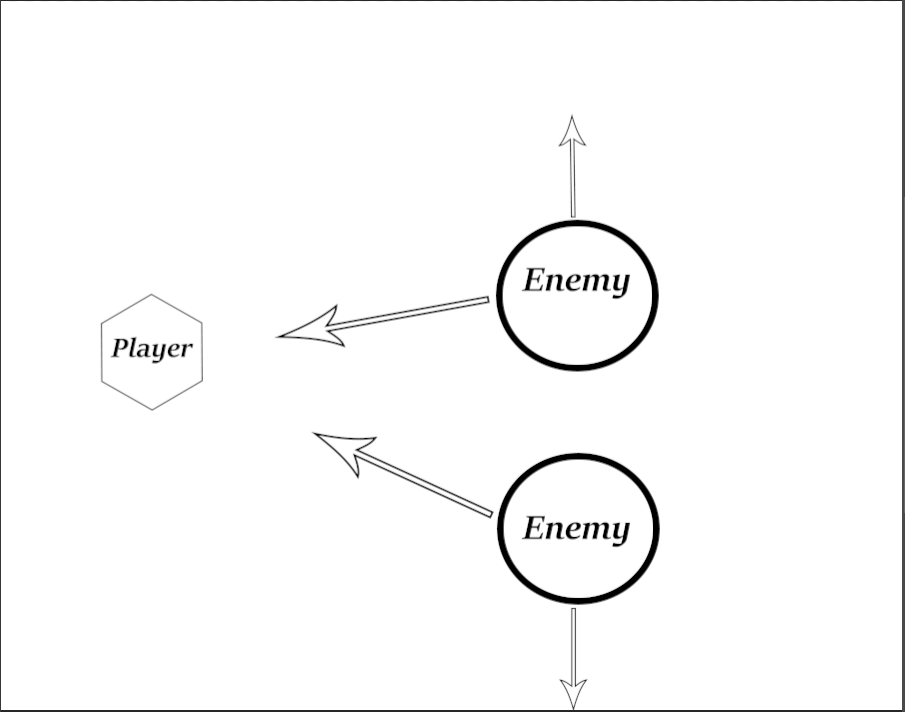
As a designer, my job is to create meaningful design and mechanics that works with work towards the general vision of the game. This week what I created was a system, which is a group of mechanics that all together creates something the player can do in the game. The system that I created was a AI system of sorts, we decided to create AI that would be programmed with a set pattern of movement since creating intelligent AI is almost impossible and considering the time limit and our knowledge that was not going to happen. I designed a melee enemy that is portrayed as a Japanese soldier during the transition era between the industrial era and the feudal Japan. This enemy tracks the player whilst making sure that he stays away from the other enemies on the screen, this is so that no matter the number of enemies on screen they don’t stack up and can be cleared to easily. When and if the AI gets too close to another enemy it starts deviating in another direction and make sure it doesn’t go off the screen. Why are we than creating our AI like this? We wanted a AI that isn’t too complicated but can still be thought of as a bit of intelligent and tricky. The fact that if we didn’t do it like this every enemy would stack and it would be a big mess, how are we doing this then? As stated earlier were doing it this way because it makes it easier on the coders and on me to define the design of the AI. So, in designing the AI was a somewhat difficult task since I had no experience with designing enemy patterns, but after doing some research on typical bullet hell enemy patterns I found that either it’s just a set pattern that never cares about the players’ position. But in the end, the design turned out good and is currently being implemented into the game. To conclude this blog post, AI is interesting but can be difficult to understand how to balance and implement into a game. Philip Hagberg Enea A picture that depicts the intended AI’s function
 |
 #5SD064