Space Shooter Project. Blog 1. Score System
|
Mole Munch Score System For this blogpost I am reflecting about the outline for our high-score system. I will begin by providing a quick summary of our game and how it works to create a better understanding of my thought process regarding the score system design. We are making a game called Mole Munch. In the game the player takes on the role of a mole who resides within a garden. It is set in different levels, with one garden being one level. Once a level is completed the player will move onto a new garden. The key feature in the game is burrowing in the ground. The player moves underground, and burrows up to the surface. The players objective playing as the mole is to eat all the vegetables inside the garden, once this is done the level is completed. However the vegetables must also provide a score which adds up into a high-score (this is the task at hand). All the vegetables are located at the surface and cannot be collected from underground. There is a set amount of vegetables in each level for the player to collect. The game is played in a top down view and you can move freely in all directions. Collecting the vegetables is done by moving the mole over them. However there are enemies wandering the garden who will attempt to catch the mole. With this in mind I had a few restrictions and goals that needed to be considered when beginning to design the score system:
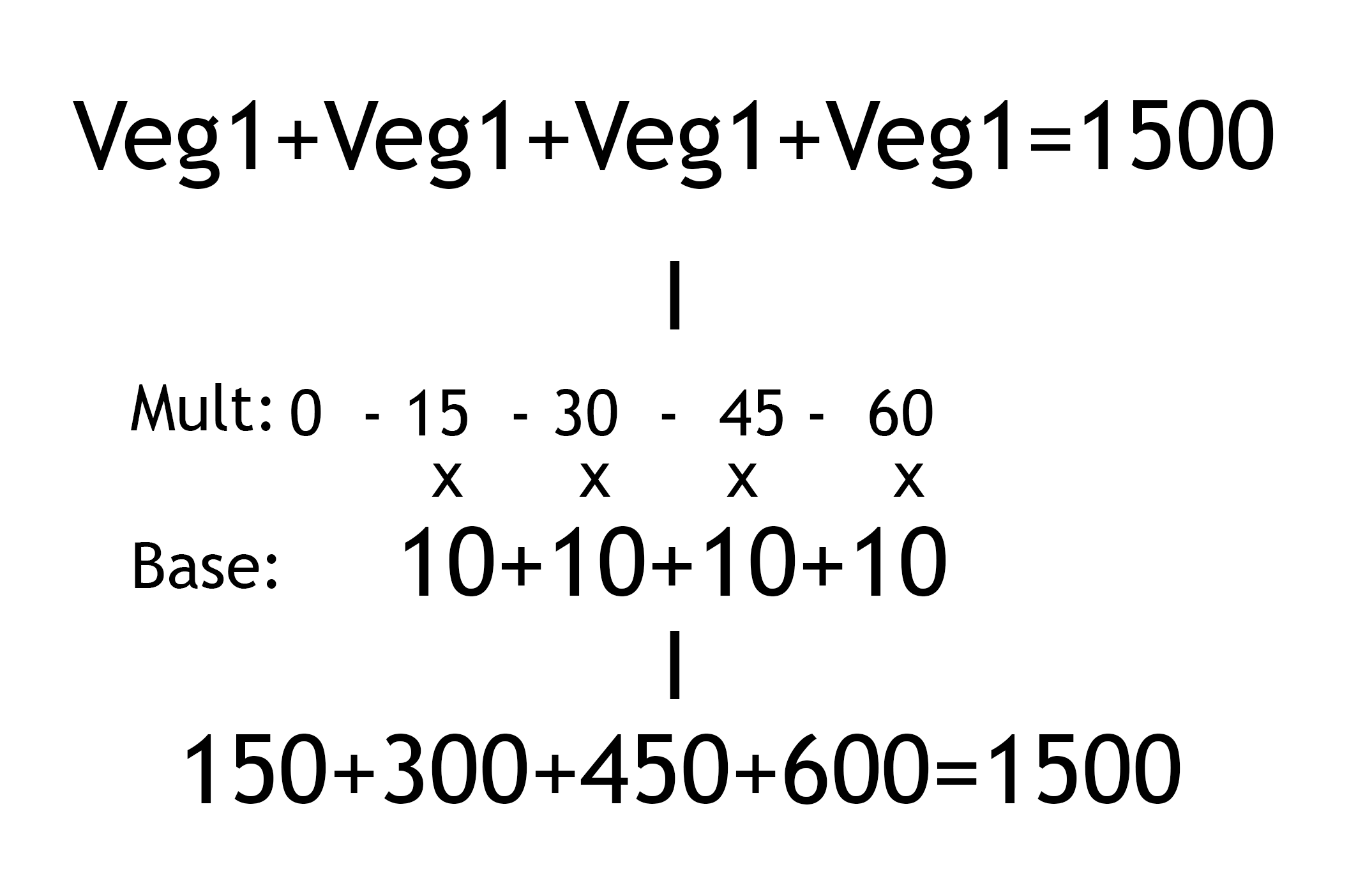
With this in mind I started working on a multiplier/combo system which would generate different score values depending on how many vegetables you picked up under a certain time frame/circumstance. So to compliment the overall design of the game, the circumstance of the combo is tied directly to the key feature. While on the surface your combo will build up, when you dig below the surface the combo will disappear. So for this to work I needed a modifying number and a base number which the modifier would be applied to. And to be able to generate more variation I needed different numbers in both the multiplier and the base score. The original concept of Mole Munch came with a different set of vegetables so I simply applied different numbers to different vegetables and ranked them based on the base value attached to said vegetable. I decided to use four different set of numbers to start out with. Veg.1 – Base: 10 / Mult: 15 Veg.2 – Base: 50 / Mult: 10 Veg.3 – Base: 100 / Mult: 5 Veg.4 – Base: 500 / Mult: 0 The way the system will calculate this when picking up a vegetable; Current Mult + Veg Mult x Veg Base Your current multiplier is your collected combo and keeps adding up until you dig beneath the ground: Current Mult + Veg Mult = New Current Multiplier Burrow = Reset Current Multiplier The Current Multiplier always start at 0 Example with picking up four Veg.1 consecutively with a starting Multiplier at 0:
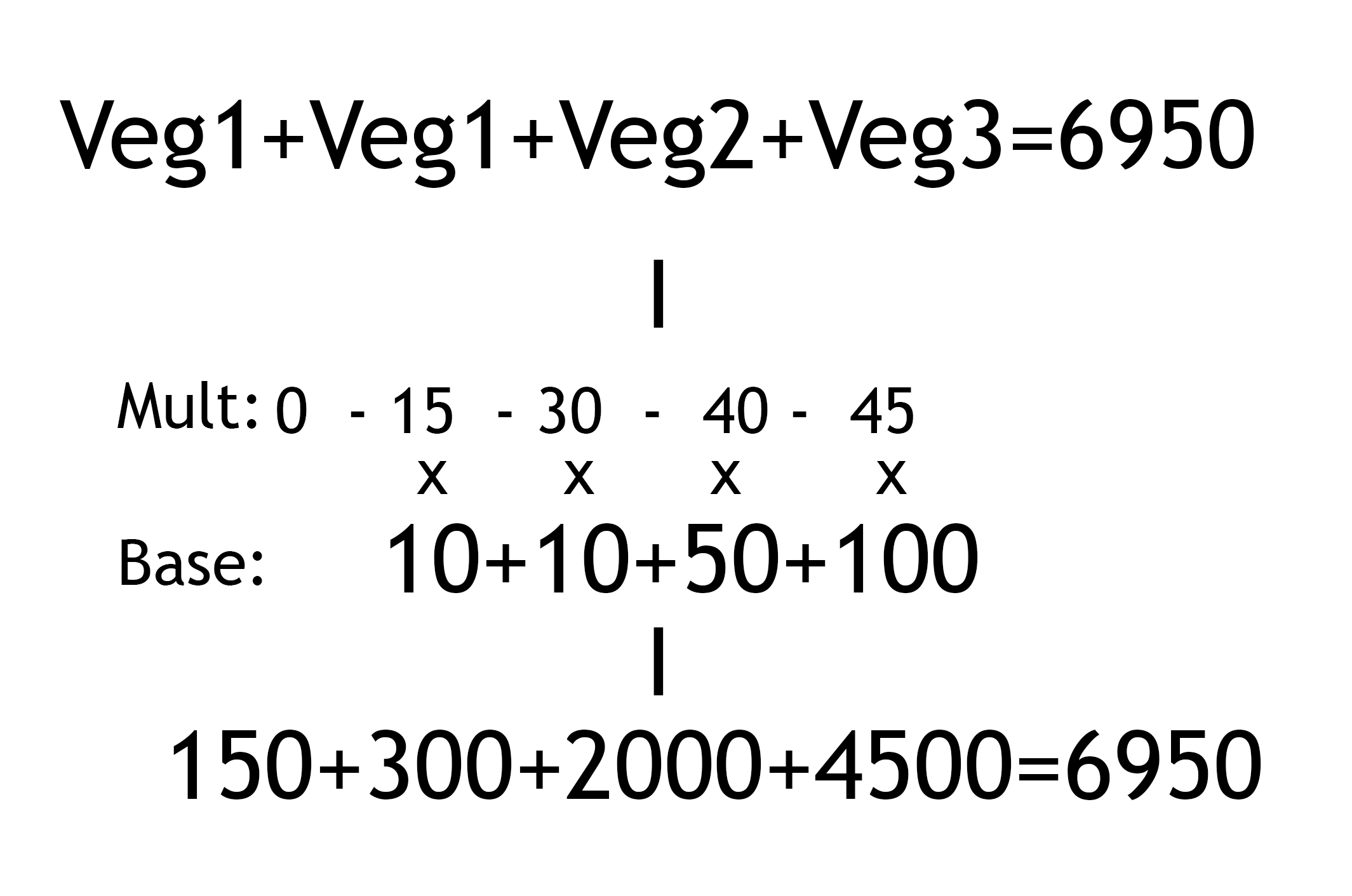
As you can see the multiplier adds itself after each vegetable pickup. So picking up a lot of vegetables in a row becomes progressively more rewarding. Additionally, with this system you get a different set of score depending on the order which you pick up vegetables, as you want to build your modifier as high as possible before picking up high base valued vegetables. For the optimal score the vegetable pickup priority need to be following: Best score: Veg.1 – Veg.2 – Veg.3 – Veg.4 The worst pickup order is the exact opposite. Worst score: Veg.4 – Veg.3 – Veg.2 – Veg.1 Let us try two examples to see how it works. So first let’s use a good pickup order.
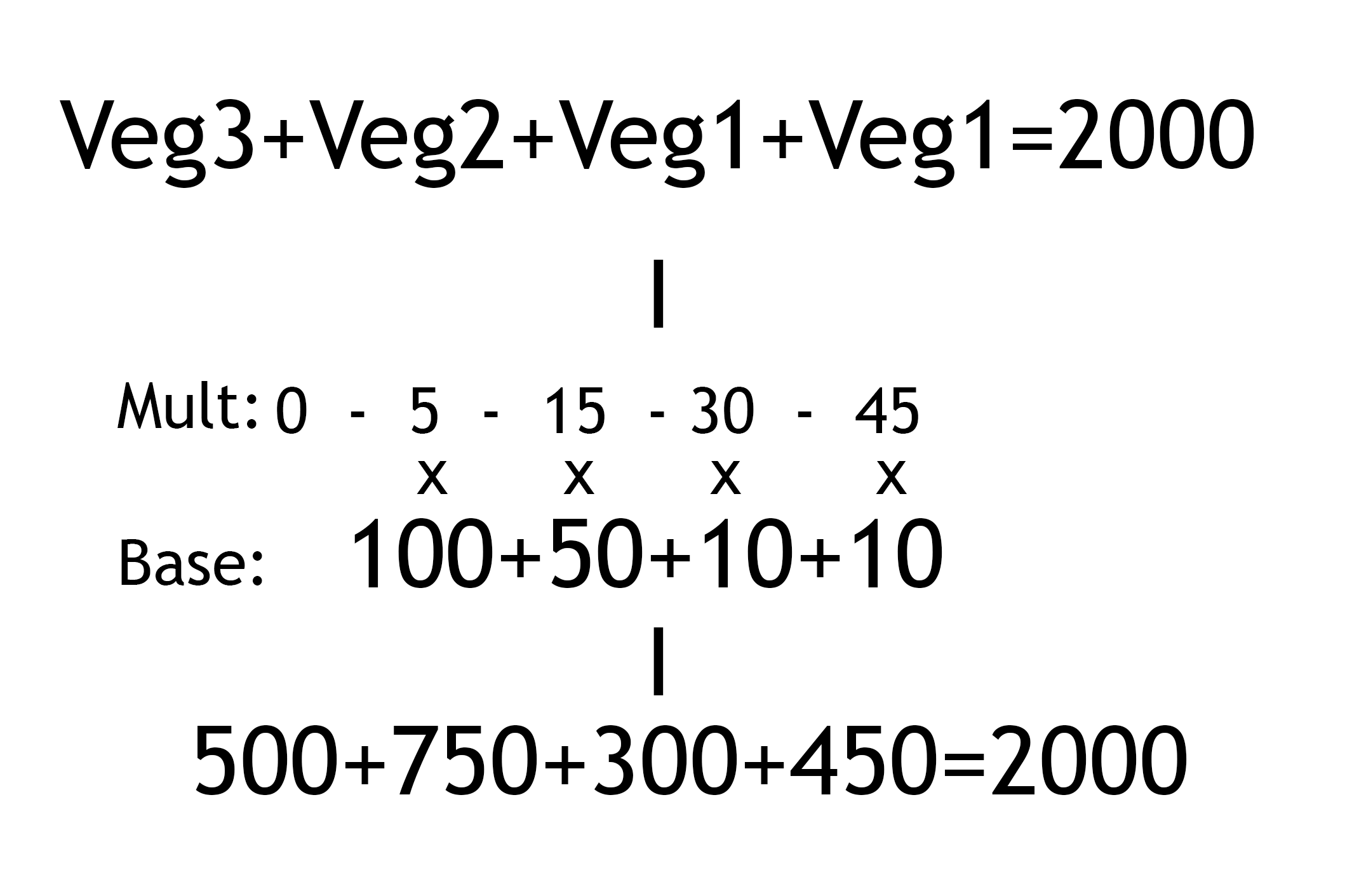
Now let’s completely flip the pickup order:
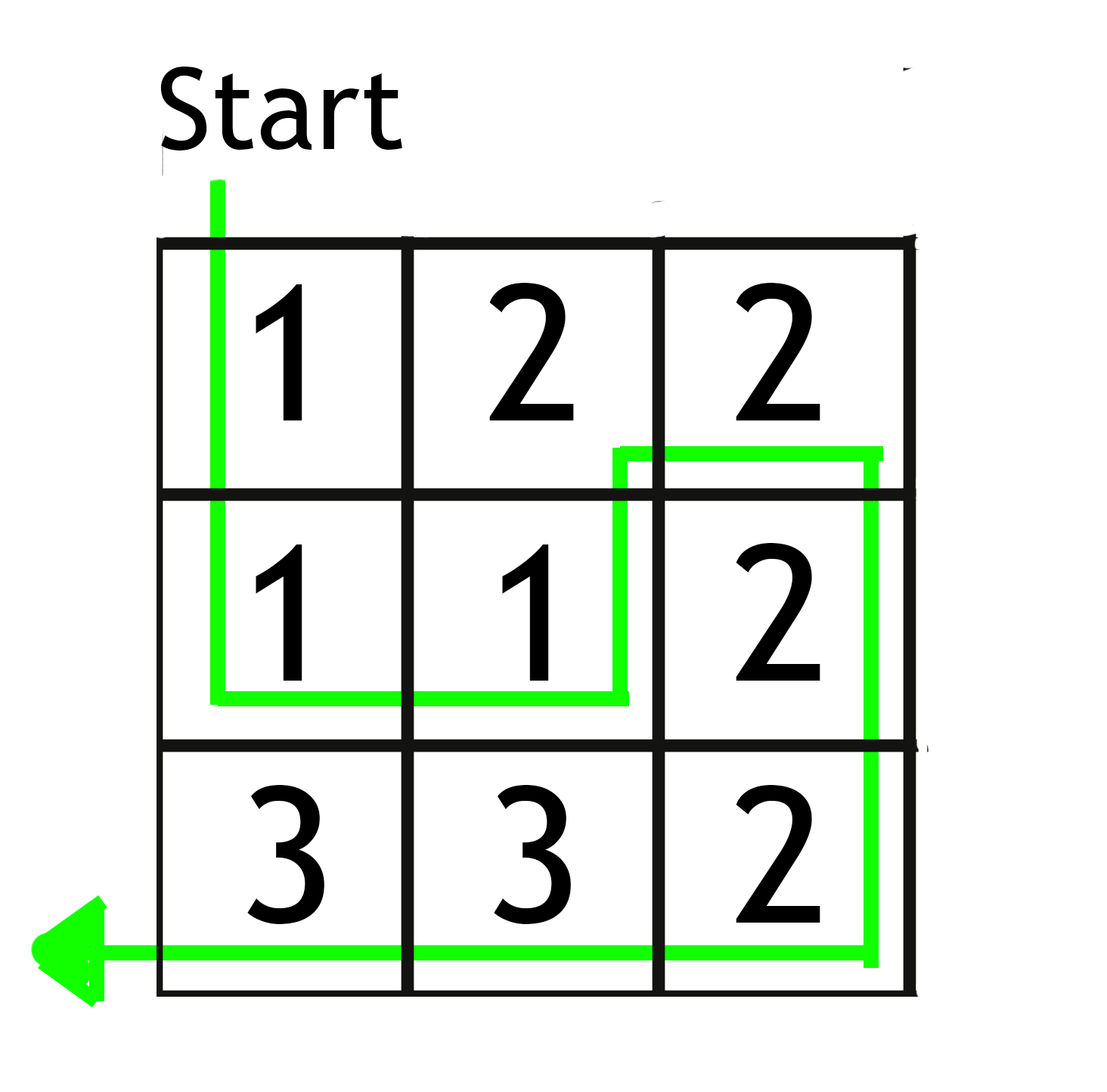
As you can see picking up the same vegetables but in the wrong order completely diminishes the potential score. Now let’s see how we can use this to create different challenges. Picture the next image seen from a top down perspective, this is an example of how a small vegetable cluster could look. The numbers represent what type of vegetable. The green arrow showing the best starting location for the quickest route for earning maximum score.
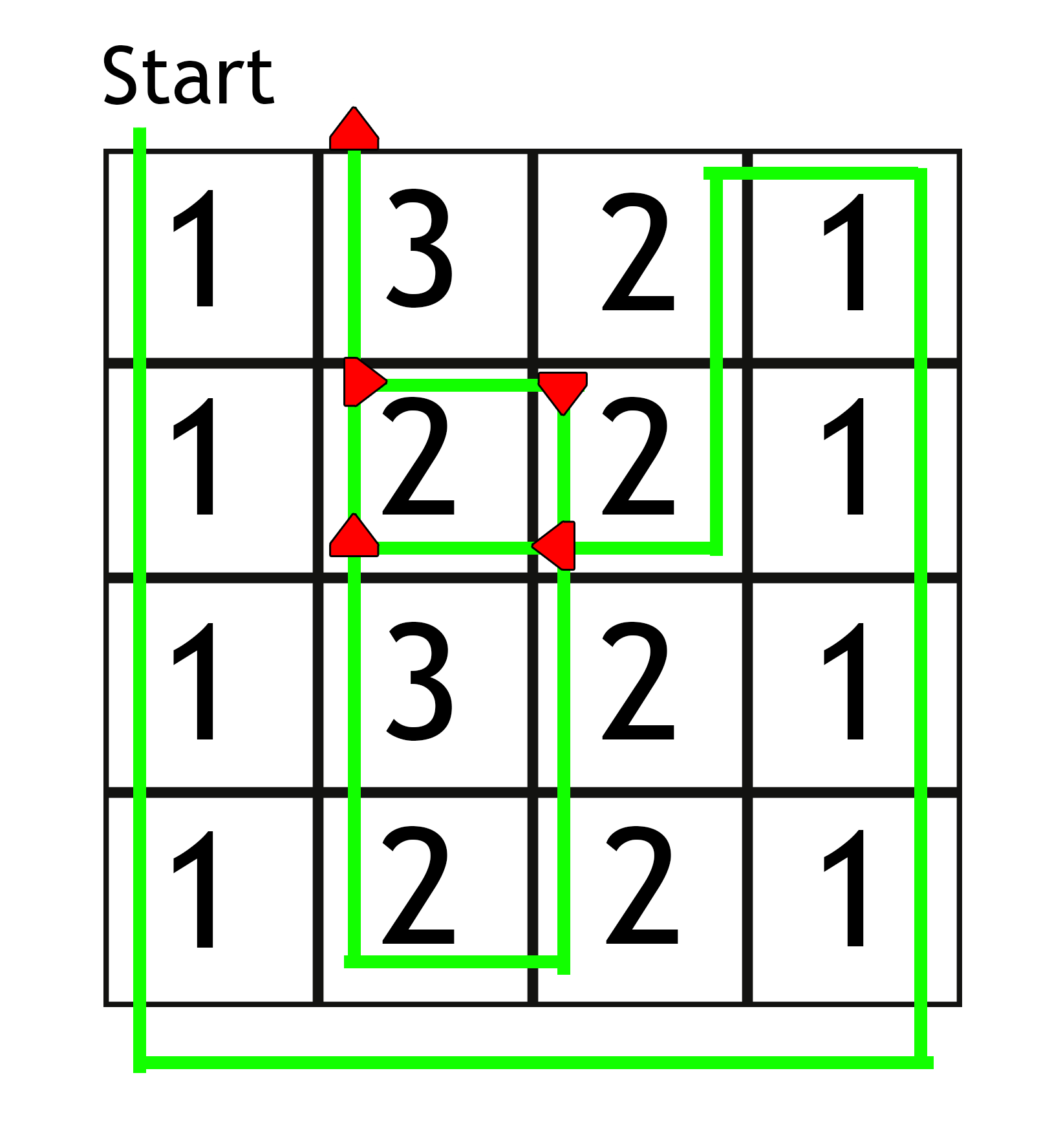
Here is a one slightly larger where you have to turn inside the cluster, the red arrows shows the direction in the turn. There is one more equally good solution to this however.
There are plenty of other more complex combinations if you want to provide more difficulty. Combining them with different enemy types inside the game will make it even harder since there will be a constant threat of being exposed. This will also serve as a way to heighten the replay value of a level since collecting the highest amount of score on the first tries could prove to be a serious challenge depending on the final level design.
 |