The Water of Umibōzu (pre-alpha state)
|
Our initial thoughts on the concept were that, due to it being based on a Japanese myth, playing should feel like an experience and like a journey. We want to keep the spiritual and mysterious (not everything is known) nature of the concept and build our game around that. What art style would suit the above best? It became clear pretty early that a more stylistic approach rather than a realistic one fits our concept best. Too detailed art draws away the focus and the attention – the game is not supposed to be realistic. The water is not supposed to be super realistic. Playing Umibōzu should feel like imagining the myth. In the end, we decided to approach this theme by giving the game a really unique art style. It should feel that the game is being played on Japanese paper with flowing ink action as in game components, supporting the setting in an Asian culture on the one hand and also indicating some mythical and spiritual elements on the other hand. Style guide reference : Ink on paper and paper texture 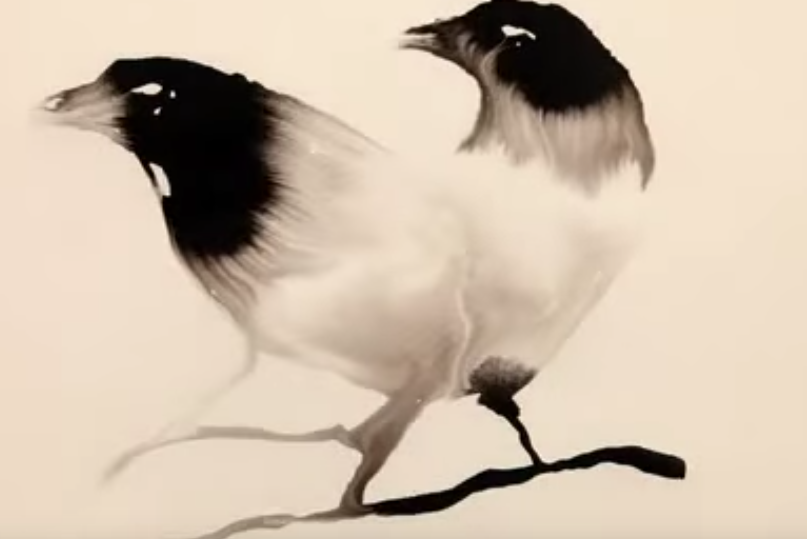 
The water in Umibōzu hereby plays a really important role, since it is the core background component and accompanies the player throughout the entire game. Ideally, the Water should still feel liquid while also having a paper vibe to it. Another point that was taken into consideration while creating the water is that it has to look good from every direction, since the player can freely move around the map. The orignal concept document does not mention the design of the water at all, giving our group some more creative freedom. The water in Umibōzu is made by creating a custom shader and applying it to a material in the Unity engine. The shader consists of a main texture that resembles paper and a noise texture as well as UV coordinates to make it look liquid. The textures were created using Adobe After Effects and Photoshop, the shader was done using the ShaderForge plug-in for Unity. Almost all attributes of the Water such as the color or the flow strength can be regulated through code or the Unity inspector, leaving the option open to implement different types of water behaviors in different stages of the game. I decided to go with a shader rather than a sprite animation since it is easier to iterate through different new ideas and in my opinion, it is more dynamic and lively. The material goes through adjustments and improvement several times in a scrum environment, which is only possible in that case because of it being a shader for a material. Final water for pre-alpha – watch fullscreen and in HD for best results. In-game results differ in sharpness (https://youtu.be/8jOzJHdItyo)
//Alexander Sinn  |