Highly scientific color stuff
|
So, as mentioned in last week’s blog post, I will go into the colorization process of some of my sprites this time. Doing so, I will also refer back to my first article about the style and character concept creation of Burn Witch Burn’s protagonist, the hunted fire-witch Izalith. [So, if you are REALLY interested in this, you might want to check it out first. But then again, who cares… about anything… anymore… Yes, my grim attitude might result from me being the sole artist on this project and slowly drowning in the darkness that will inevitably consume us all. See you, when the ever-growing void in all of us implodes and you realize that nothing really matters – and nothing ever did or will.] I talked about my inspirations and aspirations of the game’s visual style and attached some concept sketches of Izalith to show how all those abstract thought processes that precede actual asset production started to take form. Well, here we are now several weeks later, and I realized that I didn’t show you the finished main sprite for Izalith yet – even though I talked about it here and there. I know, the waiting must have been driving you insane! [WARNING: Although nothing matters to me anymore, I gotta admit that the sprite is extremely good and knowing that is the last thing that keeps me clinging to this mortal coil. So yeah,… it’s pretty good. You might wanna sit down. Who reads blogs while standing up, aynways?! Weirdo…]
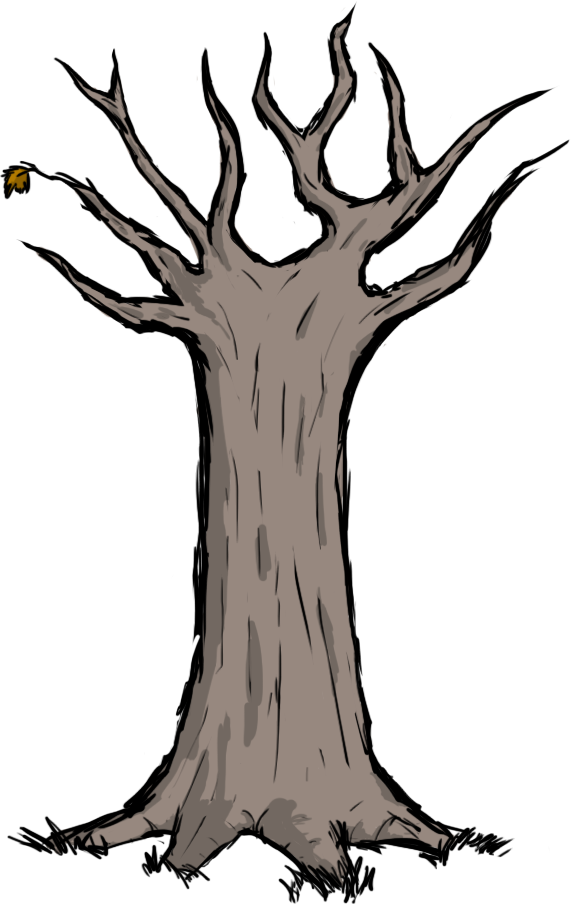
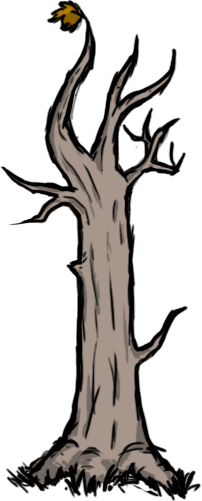
[Sorry for the insult earlier. I hope, you still liked the pic, lol] As I announced in my first blog post (and probably some sprint meeting with my team), I went with line-heavier pen-and-paper sketching style, like in e.g. Tove Jansson’s Hobbit or Kentaro Miura’s Berserk, but tried to turn it down on the line-heaviness as much as possible (for budget reasons). In combination with some simplistic coloring techniques, I tried to close the gap towards something like Mike Mignola’s Hellboy or Frank Miller’s DK2, ending up with something in the vein of Red Hook Studios’ Darkest Dungeon. I hope. This was the kind of “cartoony art style” (GDD) I can stand behind for witch-burnings. So, as you, the avid reader, might probably have noticed in last week’s post, I went with quite a pale color scheme. For this project, I wanted to go with somewhat of a “moonlit atmosphere”, like in those magical nights when the moonlight is strong enough for there to be color in the world – even if only a little bit. And there still is plenty enough room for those stark, flat-black shadows in those really dark parts, where no moonlight reaches (like under the farmers’ hats, and for the contact shadows and some yet undecided spots, which I will add later). The blue-tint typical to moonlit scenes will be added and adjusted via Unity later, while the fiery protagonist and flames will get a orange(ish)-tinted corona. But we’ll see… The paleness might seem to be slightly more reflected in the enemies than in Coloring was, therefore, more about finding the right color tones and shades, which meant tons of lurking around in the lower levels of the brightness and saturation scales in Photoshop. So spooky! I aimed to sensibly link the paleness or brightness of colors that I use to the characters/artifacts, with the protagonist popping out as the “most colorful”, the background being the least intrusive and the enemies with all their earthy tones being somewhere in-between, while still trying to keep it cohesive. To not overdo it on the details, I wanted to keep shading simple: One color tone per surface (let’s say a brown for tree bark) plus one shade (in the tree bark’s case, a darker brown) to create some volume for the objects at hand. This way, the thick black outline that surrounds basically every colored surface, also always creates the darkest “finish” to every scale of shades. Apropos “finish”…  |


 the protagonist, but I decided upon that for the sake of telling them apart indubitably.