Realism will give us better narratives, right?
|
As mentioned in a previous post, I would post my speech for my Communication class (but translated into English). Warning! This text acted as a script for me during my speech, so it’s not optimized to be read, in a deep hipster kind of way. The translation process took place after spending 2 days writing my report for our Major Assignment = my brain is mushy…
Will Realistic Graphics Give Us Better Narratives?The next generation of consoles are just around the corner and with it, the standard for graphics will elevated. David Cage from Quantic Dream took to the stage during Playstation 4’s first press conference and talked about how the next generation will make the industry able to create characters with a higher poly-count. This will let us create characters with the ability to show more facial expressions. We, humans, use small groups of muscles when we are making faces or showing expressions. And with a higher resolution character, these small changes in our faces are what we are going to be able to capture, according to Cage. He also mentioned the film industry and how they took giant leaps forward when color, sound and eventually HD was introduced. So when you hear Mr. Cage’s speech, it’s hard not to think that he believes that with better graphics we are going to be able to create better narratives. But is that really the thing we need to push ourselves forward in narratives? Games like Battlefield 3 and Crysis 3 has already shown us what the next generatopn has to offer when it comes to graphics. But I think that we all can agree that these games didn’t really have a capturing narrative. So, why have they not being able to deliver on that point? Even though they have had the technology for it? The Crysis games have always been seen as more of tech demos for Crytek’s CryEngine. So, maybe we shouldn’t expect more from them. But Battlefield, with the 3rd edition has been trying to lean a bit towards the mainstream audience by creating a singleplayer mode with a story. Which many say was a complete fiasco. b So we have had the technology that Cage has been talking about for years now, but we still haven’t created a realistic game with a captivating story yet. But then we have other kinds of games, who has not laid there focus on creating a realistic environment or graphics, but has chosen to use their graphics to as a tool to elevate their storytelling. Games like Limbo, Journey and the Walking Dead. These games has been celebrated all over the gaming community for their narratives and unique approach to their graphics.
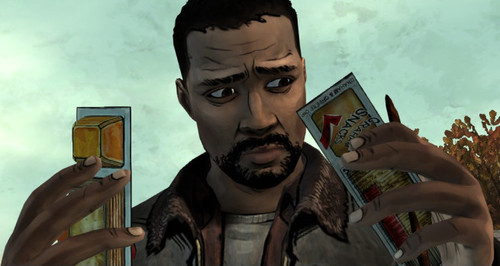
In the Walking Dead game, we get to follow a group of people how are trying to survive a zombie apocalypse. This might seem like a game which would be fitting in a realistic environment (apart from the zombies) and with realistic graphics. But the creators chose to design the characters and game world as it had been taken directly from a comic book. So the characters didn’t look realistic at all, but they still were able to capture emotions such as rage, remorse, happiness and sadness. And I have never been more immersed in a story or attached to a group of characters as I was with that game. (plz hire me, Telltale!) And they did that, even though they were missing those extra polygons and that performance capture data that David Cage was talking about. And then we have games like the Mass Effect Series and the Uncharted series, which have given us a well written story and also beautiful (and also quite realistic) graphics. But the difference between these games, Battlefield and what Cage is talking about is that the creators for these games have been putting more time and effort for getting a well written story and deep characters that the player can relate to. Instead of focusing on the realism of their graphics to be able to create their story. We all know that the default male Shepard can sometimes look like he is made out of botox and that Uncharted’s facial animation can look a bit wonky from time to time. But even so, Bioware and Naughty Dog have created narratives and characters which we will remember for year to come. And hopefully that will be good memories. So, will the new hardware help us to create better narratives? The answer is probably both yes and no. Sure, with more powerful hardware, we will be opening up doors for new possibilities. Like having more objects on the screen at the same time or even more realistic objects. But I don’t think that it is the person’s appearance that we relate to. It’s their actions that we think of. David Cage is right about that a higher standard will help us a bit on the way, but we won’t reach the final goal line until we sit down and invest time in what the characters stand for. Thank you! (The ending looks sooo bad in English, but I promise it was like… totally awesome in Swedish!…… yeah…) |