Motion Capture for Games, Reflective Blog 01
|
This is my first report for the Motion Capture for Games course, which details use of motion capture in video games. In this post I’ve chosen to go through the Asssassin’s Creed franchise’s use of mocap for their animations. Research for this report was difficult as many behind the scenes videos on the series are region blocked on their respective sites, but I have assembled as much general information as I could find.
The game I chose to research for this report was Assassin’s Creed. Specifically, I chose the entire franchise in general. This was to make it easier to find information, as I found that searching for just a single game generally yields very few usable sources. Assassin’s Creed games are pushed out every year, and each game reuses assets from the last, particularly when it comes to animation. In the very first game of the series, in-game animations started out being constructed as individual keyframes. As the project moved along, the use of motion capture was implemented to save time. Instead of a straightforward motion capture, these shoots were done in a similar, key-frame style. Animators would get into the suits in front of the cameras and act out each movement much slower than reality, focusing on getting good poses which would then be built upon and timed after the fact. 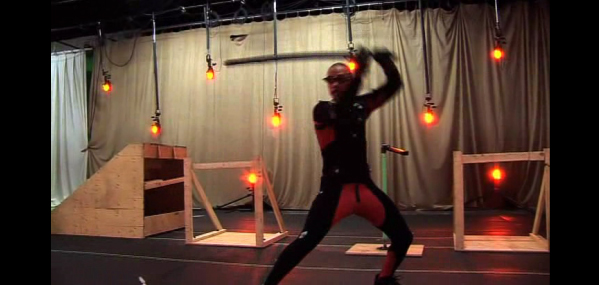
A mocap shoot from production of Assasin’s Creed 2. Even as use of motion capture got more and more common in development of later entries in the series, they continued to use a very patchwork method of using their motion capture footage for animations outside of cinematics. Animators would cut out individual parts of mocap shoots that they liked, adjust the animations to their likings to strengthen the action, and paste them together with completely different animation recordings from other shoots. As the series has grown, the list of animations for their player characters has gotten longer, and the development team has started to rely more and more on motion capture and in-engine physics for their animation sets. In Assassin’s Creed 3, they started hiring stunt actors for their mocap shoots to capture more physically straining actions, and to reduce the recording time spent with amateurs stumbling around by relying on professionals. 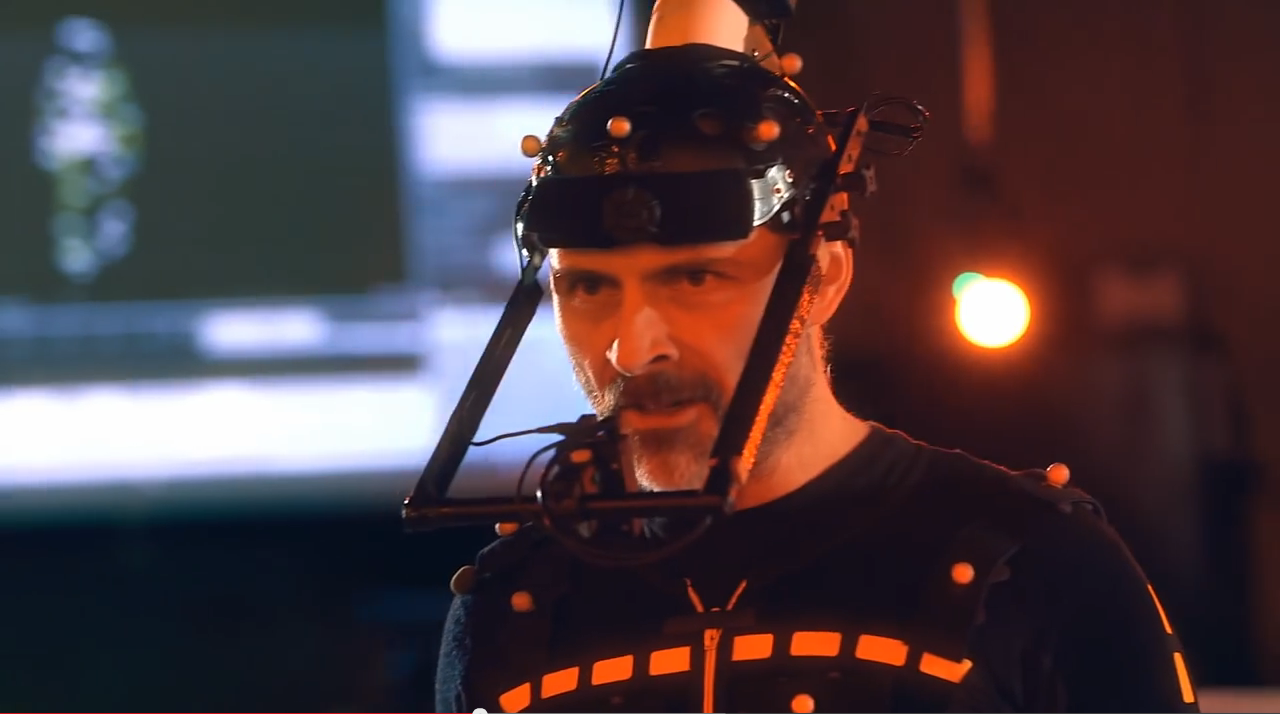
A Full Performance Capture setup, with an infrared camera attached to the actor’s head. Assassin’s Creed makes use of the Passive Optical Motion Capture method of mocaping their animations. In Assassin’s Creed 3, they started using a Full Performance Capture setup for cinematics. This setup records the actor’s movement, voice, and films their face to capture every bit of the acting to use in-game. To capture face animations, they use in-house Ubisoft technology called mocam. They shoot the actor’s face with an infrared camera placed in front of the face, and the footage is converted into animations in Motionbuilder. This software can capture facial animations and apply them to a model that doesn’t necessarily resemble the actor from the footage. 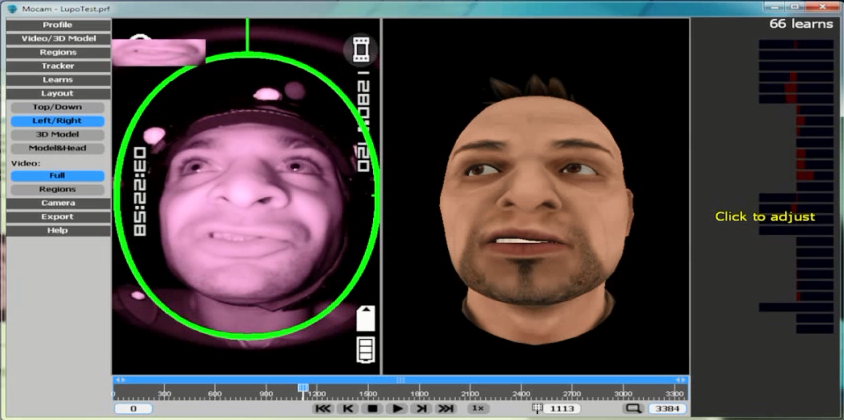
A screenshot of Mocap, with footage of the actor on the left, and animation results on a character model on the right. In my research on this subject, the most interesting thing I learned was about the applied usage of motion capture. I hadn’t considered before how versatile motion capture footage can be, but with Ubisoft’s patchwork use of mocap footage in their animations, I now have a better idea of how mocap can be applied in different ways. It’s very interesting how they achieve their results by applying a mix of keyframe animations, motion capture and engine physics, and then adjust their animations after the facts to tweak the motion to their liking. References |

