Missing pieces
|
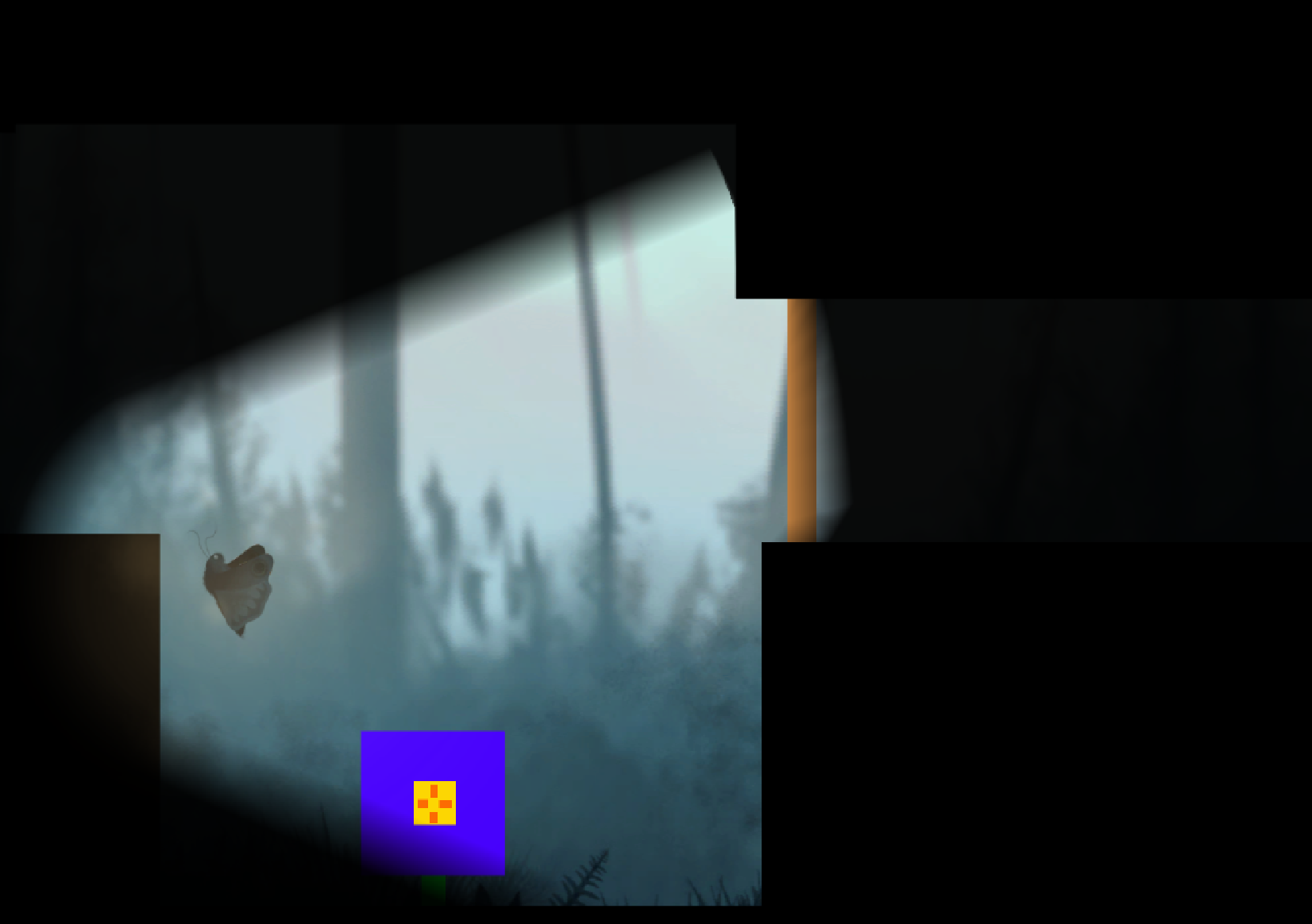
In my last post, I discussed our game’s lack of an engaging central challenge (or at least that was what I was getting at). Since then, I’ve been trying to figure out what that engaging central challenge could be. There were a number of possible answers, the most obvious being to throw in a bunch of enemies to give the player an immediate threat to avoid. This is a tried and tested way of making games ”fun”, which, I feel, is in itself a reason to avoid it. Even if we had wanted to, approaching deadlines made it a moot point, as we didn’t have time to design and implement enough enemies to make that a viable option. Looking at what we had so far produced, the more realistic (and palatable) option was to include some puzzle-like elements. Although it would require some rethinking and reworking of things we had done, it was certainly achievable, and wouldn’t be wholly inconsistent with the feel of the game. Some people play-testing the game had even suggested this, and there were ideas in the team for some elements that could be used. The only thing that remained was to figure out how those puzzles would actually work, and how they would work together with what we already had. This led to the (admittedly not entirely original) idea of locked doors and keys to unlock them. As the player moves through the game, they will come upon places where their path is blocked. The player must then look around for a key, in our game represented by a flower (the moth suffers from a sad lack of opposable thumbs, making actual keys problematic).
As the player progresses, the challenge is compounded by dangerous spiderwebs, cramped spaces and added layers of doors-that-needs-keys-to-get-to-the-key-to-the-door situations. And all the while, you still can’t see very far around you. The general principle is simple enough. Now all that remains is to design a series of puzzles that are tricky enough to be engaging, but easy enough to solve.  |