Postmortem Board Game
|
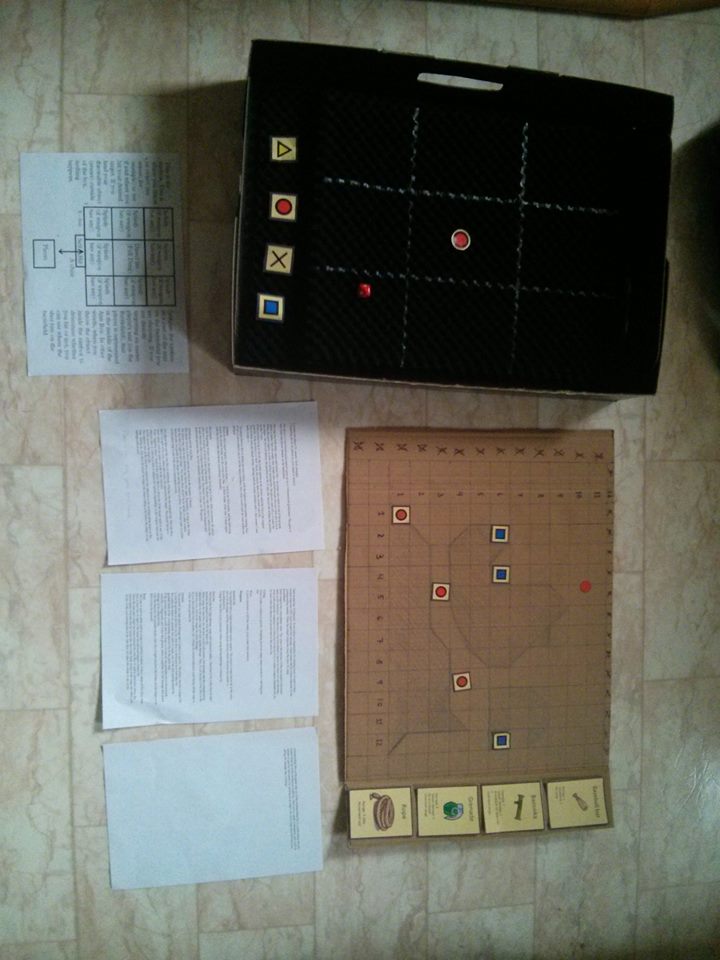
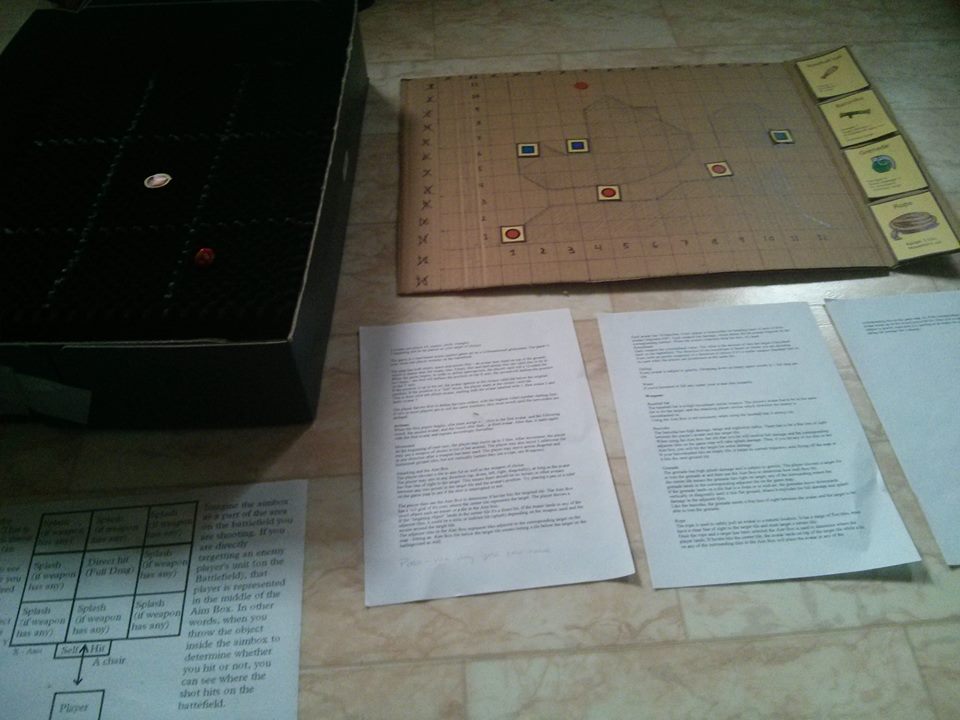
A little less than a week ago we got an assignment in class: pick a game, determine the core experience, and try to emulate that with some kind of board game. My group, figuring we’d better pick a game that was generally well known, and specifically known and played by all of us as the subject of our assignment, we chose the Worms series to base it on. It had the added bonus of a relatively high likelihood of translating well into a board game, too – although there were naturally complications the moment we put any deeper thought into how we’d achieve this. The core experience of this game, we concluded, was the part skill-based unpredictability of each action. An attempt at lobbing a splitter grenade at an enemy player’s worm could end in spectacular success with all the mini explosions hitting their marks, but it’s just as likely to mess up the throw and wind up with the grenade in your own face. And using a ninja rope to get anywhere had a high risk of your worm making a beautiful somersault into a death by drowning. That’s the fun of it. Before I get into how we tried to simulate the high-risk aiming of playing worms, I’ll just make a note of what the board looks like. We made a 12×12 tile grid system, with some tiles being empty air, some being solid terrain, and some being half of each, split diagonally, all arranged into something resembling a traditional 2d Worms map, as seen from the side. So how’d we emulate a system of aiming, with suitable risks of failure? W
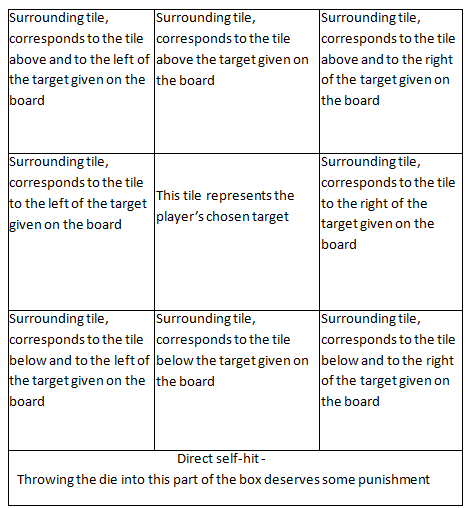
We called this thing the Aim Box. Pick a target on the map (had to be a terrain surface or an empty tile), and then throw the die provided and hope it lands in the middle for a direct hit. Direct hits aside, what tile the die lands on means that’s the spot towards the projectile travels – meaning the if there’s an outcrop of terrain in the way of the projectile hitting the corresponding tile, that’s where it’s stopped. The bumps of the foam made the die’s landing place very difficult to determine beforehand. Line of sight, determining exactly how each weapon (bat aside, bat’s easy) acts, was by far the least intuitive part of our finished game, as noted by both those who played it and us. We really needed a proper definition of the rules that governed it, and hard as we tried to write and figure it out, the end result came out confusing. At the very least, the box was a good idea, even if the application of it failed in clarity. Other than that, however, I daresay it was all relatively successful. Oh, and here are some pictures of the actual thing:
 |