Assignment 3 – Character Modeling – Finishing the Model
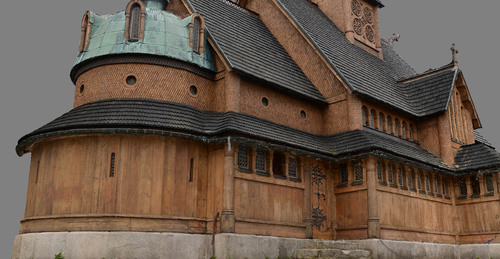
Class RecapI was unfortunately not able to attend this week’s seminar when the class went through 3D scanning. But I did some of the work later and I also read a recommended article on the game The Vanishing of Ethan Carter whilst I previously played some of the game. So I can give you some of my thoughts on 3D scanning anyways! Articale I will be referring to: http://www.theastronauts.com/2014/03/visual-revolution-vanishing-ethan-carter/ I started to play The Vanishing of Ethan Carter a few days before the seminar took place, and all I knew of the game was that it had an interesting story (I’m a sucker for narrative), that it was built with Unreal Engine 4 and that it was really pretty. The first thing that struck my was that this game creeped the hell out of me, but a part from that I thought that it was just amazing and beautiful! I was in awe of how the textures could have such variety! Not a single stone in a small patch of the forest shared the same mossy mark or that obvious weathered scratch. So how did they do it? Well, I probably gave it away in the first paragraph and with the link to an article about how they 3D scanned some objects in the game. So yeah, they did it be 3D scanning! Surprised? (To get all the technical details, you can read the article. I will mainly talk about my views of how this could affect the industry) So what are the upsides to 3D scanning, or “photogrammetry“? Well, it is basically the variety and high fidelity of the textures. These models and textures are created through a bunch of photographs of every visible surface of the becoming model. This means that you can capture all the detail of real life objects that we often see past. (See picture above how not a single plank is the same as another.) As Andrzej mentions in the article; If an texture artist was asked to texture that house, he/she would probably use the same types of weathered decals in different ways to give the house details. This would not create the same believability as the scan where every inch of the texture is unique! Another upside, a part from the potential for great textures, is that when you take these photographs you are basically creating the model and texture at the same time. This, if everything is successful, can save you a lot of time. But be prepared for doing some manual tweaking since these kinds of software that is used to create the models are not perfect. Which leads us gently to the downsides of photogrammetry. As we stated previously, these applications are not perfect and easy to use by a long shot. One or two photo that the software thinks does not match can give you massive errors or modifications to your model which means that you have to go in and manually fix the model. This means that you have to be extremely careful and thorough when taking these pictures. And yet again as Andrzej mentions; lighting and other conditions has to be perfect and consistent through out the scan. If you ever had tried to create your own textures from your own images, you’ll quickly realize that the brick wall with strong sunlight hitting it wont look so good when applied to an object. The best textures are created from images taken during complete overcast where the sunlight is as diffused as possible! Optimizing models is something that your employees have to spend a lot of time with as well. These scans will become enormous in polycount and texture size. So you have to ask yourself if it is worth it to spend so much time optimizing instead of just creating the models from scratch? 3D scanning for faces of actors have been used for a few years now (See L.A Noire), but for objects it is fairly new, at least in how it is used in the games industry. Even though we see a huge potential through The Vanishing of Ethan Carter, it still has to become a lot more cost effective for the industry to be picked up. Why? Well to scan objects requires both time (traveling to location, taking the photographs, letting the software do it’s magic and then clean the model up) and effort which only the bigger studios can afford. For this to be a standard, there needs to be a simplification to the process. If a small indie studio is doing some scanning and a model messes up due to bad sources. They have wasted days and days (= money) of work instead of just doing a simpler model by hand quicker, albeit not with the same result. But as the different applications will improve and evolve with time, I’m sure it will become a lot more user friendly and by then be more common in the industry!
EhtaHe has a head! This is Ehta in his current state. Even though she looks completely wasted without textures for her eyes, her edge flow optimized and finished! Now it is time to start with the textures. I might go in and do some small changes to the topology if I notice anything major. But for now it works! Please ignore the fear oozing from the Ehta’s face in the wireframe. |