Challenge – Not the BEES!!
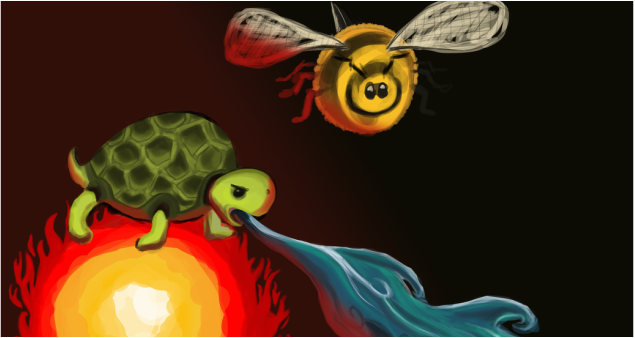
This week my classmate Sebastian and I have been working on a concept challenge. In one weeks time we had to come up with a Video Game Concept with help from Rory’s Story Cubes. The app randomizes dices and with help from these you have to come up with a narrative for your video game. Three of these images were turtles and bees and a questionmark. From these we came up with a
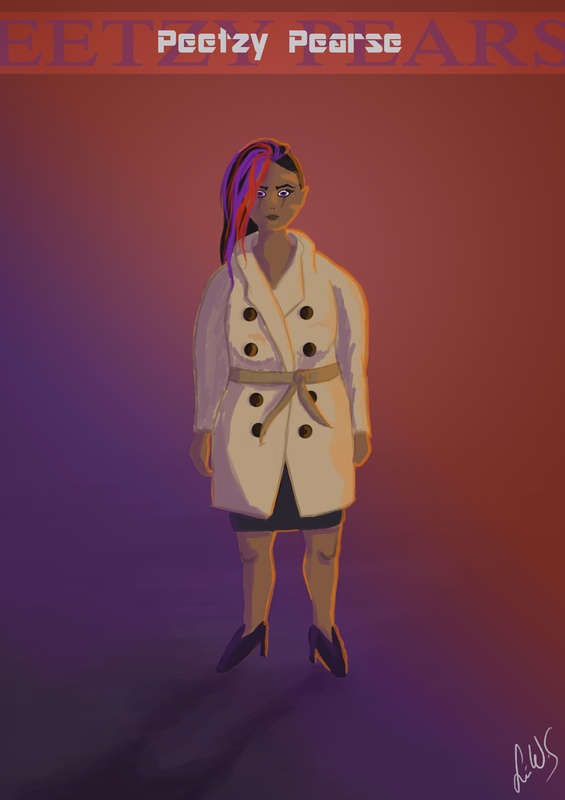
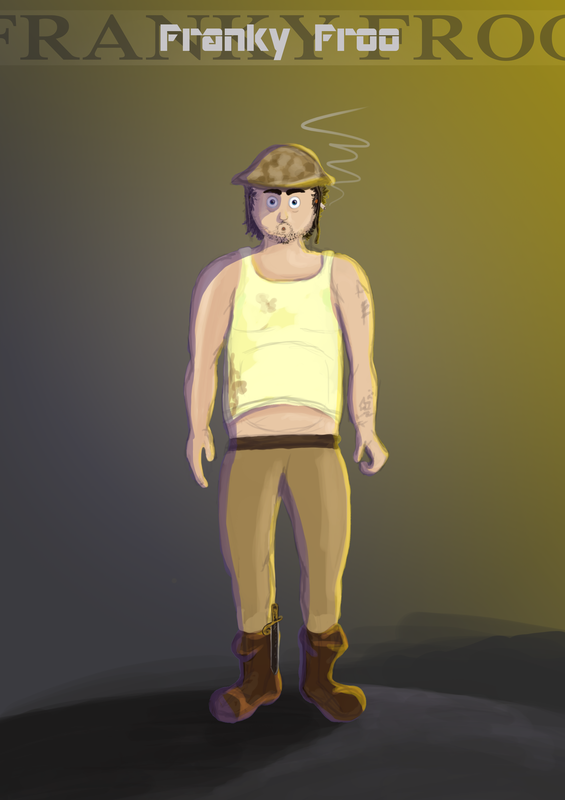
Apocalyptic age were unknown Bees and Turtles They enter this reality from another dimension using a portal. Then they start a great apocalypse, attempting to destroy the whole world using their unknown powers. The players quest is to close the portal that has opened to another world. We also generated two random characters. Franky Froo the paranoid war veteran
Aesthetic goals
With story in place, we began pondering the aesthetic goals of our game. Since it was apocalyptic and involved mean bees and turtles, there would probably be a lot of fighting. We decided on making it a power fantasy for the player, since we felt comfortable with that kind of approach. The “kinds of fun” we decided upon were Fellowship, Challenge, and Discovery. Fellowship was due to curiosity, since we thought co-op games were somewhat rare in the market. We also wanted to deliver engaging gameplay with moment-to-moment decision making, which made Challenge a priority. Lastly, we chose to include Discovery since we wanted to try some world building. Main Mechanics We then thought about how to get players to constantly interact and finish each others kills. We had a clear goal in sight, but finding the mechanics to promote it was a challenge. In the end we decided upon a daze/execution system, where enemies need to be first dazed and then executed in order to be eliminated. This way, one player can focus on executing and one on dazing. At the same time, player roles are not set in stone since players can switch between dazing and executing freely. While it is possible to kill alone by switching from daze to execute with a time penalty, finishing each others kills is beneficial since it is faster to do, and we plan on balancing the game so that you will absolutely need to do so. 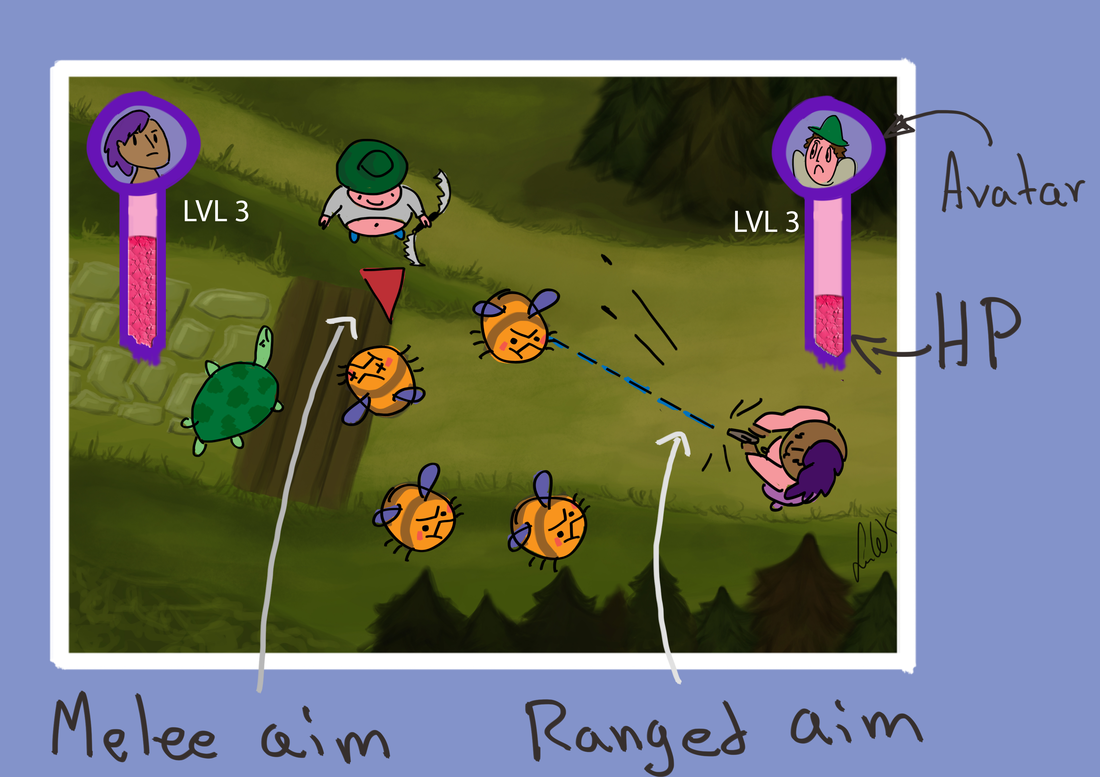
We paper prototyped this, seeing how four enemies and two players might interact if the
ranged daze and melee execute system was in place. We judged that the ranged/melee mechanic would benefit gameplay from this prototype. Most importantly, it made the daze and execution part of combat two distinct elements, making sure players would understand the differences between them; daze is range, and execute it melee. Simple! Next, we decided that there does not have to be only one daze attack and one execution melee attack; there could be a large number of attacks available within the daze and execution category to give the game depth. We pondered how enemies would react to players. We decided that they would follow the closest player. When dazed, they would stay stunned for x seconds, depending on the enemy and the type of daze attack used. We also considered having turtles use mainly melee attacks and have bumblebees use ranged attacks. This would allow players to easily spot what enemy types will do since bees and turtles are very different. Lonely hack-&-slash fanatics and co-op players Next, we compared our games to other games within the same genre, to see where our audiences crossed. It is very humbling comparing our small project to hack-&-slash multiplayer giants like Diablo, Torchlight, and Path of Exile. At this point we realised our game, from a business perspective, was basically Diablo, but less good. We also looked at other co-op experiences outside the genre, like Portal 2. Our reasoning is that players new to the hack-&-slash genre will play “Not the Bees!!” due to the focus on co-op. Based on our market research, we modified our game in the following ways to make our game more appealing to our audience; * We included a single player mode, since pure co-op is very hard to sell. We believe very few would buy a game expecting to play it with a friend. It is more likely to have someone buy it, play it alone, and then decide to invite a friend. And so we designed a single player mode where the other player is replaced by an AI which can be ordered around. By nerfing the mobs by health and hit – points and enabling faster weapon switch we later removed the AI. * We also decided to include a level up system, in order to increase gameplay depth. With only one melee attack and one ranged attack, the game would have quickly become repetitive. This might have been acceptable if the age group was 6-12, but not so considering our new target audience. We established that ranged combat had a wide range of attacks that all dazed the enemy, and melee had a wide range of attacks that all hurt the enemy once dazed. Players can choose new daze or execution attacks as they level up. Next, we considered different audience types. According to the assignment, we needed to design features for the early adopters, second tier, and mass market. We speculated that our early adopters were the Diablo and Torchlight players looking for more experiences. These people will play our game alone, and then invite a friend. The second players represent the second tier, getting dragged in by their friends enthusiasm. The mass market is still a mystery to us. Do we include customisation for them? Do we tell them our game has good co-op? We have no clue and we are scared. Later we decided that the mass market were people into cute art styles. However we are not sure this is an acceptable approach to the mass market problem.
Explanation of audience and justification of feature set Looking at the engaging level up systems offered by other hack-&-slash games, we realised that we needed a level up system to deepen our game and prevent it from feeling simplistic and repetitive. Offering the players a variation of the core gameplay every now and then is an important part in any game, and levelling up and selecting stronger powers gives the player a sense of growth. When levelling up, the player selects a new power to acquire in the melee or ranged category. Our goal behind the early versus later powers is to have the later powers be more powerful, but also trickier to use. For example, a player may need to be more precise in order to use a later power, in return it is also more powerful. Finally, the mass market are lured in by the fun character design and engaging art style.
 |