3D Week 3
|
This weeks post will be coming in 2 parts, first a part where I write about the optimization of the crates and later a part about the upcoming task where I will show pictures of an object that I’m going to model in the near future. Part 1: Optimizing the crates Post apocalyptic crate
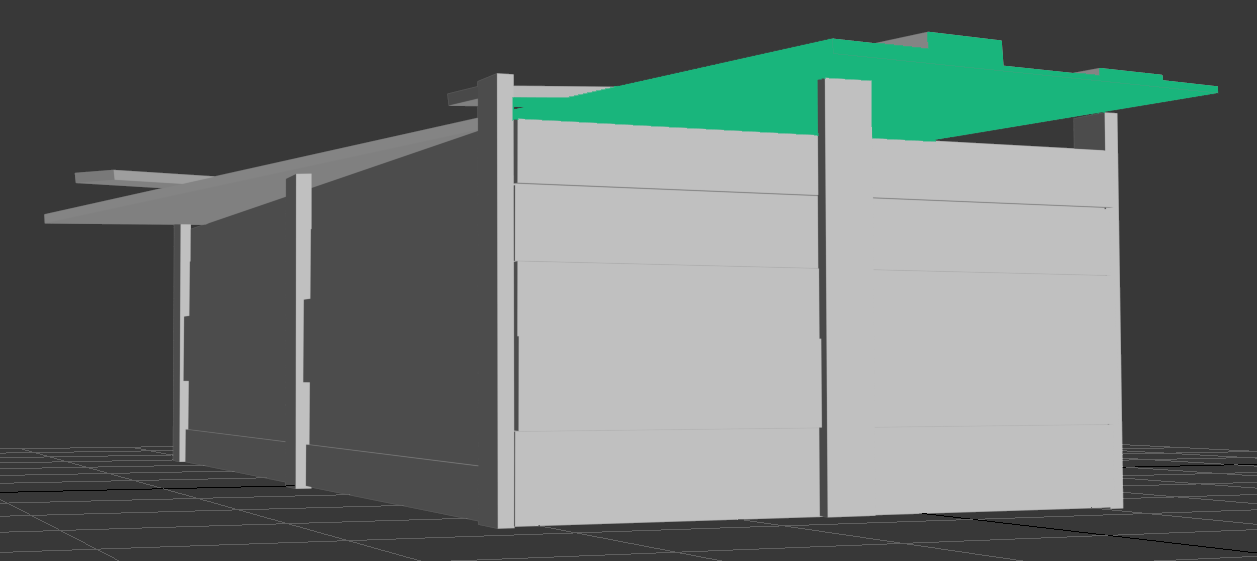
This is the crate that was optimized by Folland Rickard. To the left we have the original model and to the right we have the optimized one. The area that has been highlighted (light green) is the place where most changes took place. For this one, that area was the lid. The biggest issue with the lid was that I had created it as a plane and than extruded specific areas of the plane to create planks. This resulted in overlapping faces and flickering in one area. Looking at the right part of the lid on the left picture, you can clearly see that it only consists of a plane, basically there is nothing there but 2 faces. The lid was given more of a thickness in order to fix this. The overlapping faces were also fixed by deleting them and creating new faces. Urban Crate
This crate was fixed by Ludwig Lindsttål, same as above we have the original to the left, a zoomed in version of the original in the middle and the optimized one to the right. For this crate, two areas were the main subject to change (red and light green). Starting by looking at the bottom of the original version (zoomed), you can see that there is a face at the foot of the crate where the planks are pushed in. To fix this, the entire bottom face was removed and replaced with a new one that fitted better. For both of these crates, the poly-count was severely reduced and had n-gons removed.
Medieval Crate
This is the crate that I ”optimized”. Same as above, (Red and lightgreen) highlights have been added to show the areas that where subject to the most changes, original on the left and fixed on the right. The reason for me writing ”optimized” is because that is partially a lie. This crate had some 170 overlapping faces, plenty of overlapping vertices and too many n-gons to count on one hand. So after recreating the crate I was left with about 1/4 of the problems I originally had. An example would be that the 170 overlapping faces were now down to just 40. I had no n-gons to fix, nor any overlapping vertices. So, regarding the largest changes I made when reconstructing, lets start at the bottom! In the original model, the bottom had the same construction as the all the other sides. I felt that adding that extra side only increased the poly-count and the number of potential issues. Another argument for removing the bottom construction was that it’s an area that may not be visible most of the time. The second zone that had large changes were the remaining sides (so essentially the entire crate). In the original version, the horizontal planks were far more uneven, this resulted in many more issues, especially since I extruded them more than once per plank. I also reduced the total number of horizontal planks, reducing the amount of issues I had with the crate as well as the poly-count. Instead of making them all diferent sizes, I made them with 2 different sizes. To make them look more ”random” I made sure that the planks on the same height didn’t have the same size (or amount of extrusion, this is visible in the image of the fixed crate). Fixing my own crate turned out to be far easier than optimizing someone else’s work since I knew exactly what I had done with my own model. While saying that, having my own work looked at and fixed was a huge learning experience. Since this is among the first models I have ever created, being in a group with experienced people was really helpful.
Part 2: The future model
So the object I chose to try and model was this dagger. I chose this object because it was one of the best preserved items I found, I thought it looked cool and working with models like this seemed like a lot of fun! The dagger has supposedly belonged to a captain on a ship that sunk somewhere around the (if I remember this correctly) 1700’s. The reason why they think that it belonged to the captain was because of the patterns on the handle and the fact that no item of similar was found along with it. One of the things that I will try to avoid later on is making the blade too shiny, I might make it look a bit duller just to emphasize the handle area where most of the details are.
Well, that’s the end for this weeks 3D post!
|