Design-Build-Test-Learn
|
Play testing is an essential part of game design. Game design, like any other design follows a cycle of design, build, test and learn. 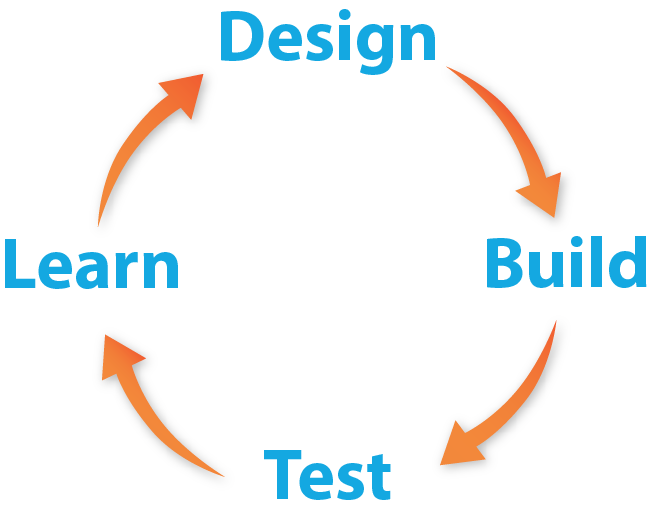 Play testing and the analysis of the observations made during it represent the last two steps in this cycle. To be able to evaluate the design decisions in the game it is important to let “outsiders” (people that are not in the development team) test the game. The reason that this is of such importance is that the play testers do not have any knowledge about how the game is supposed to function, therefore the team can easily detect where their design failed to communicate and how they need to improve it. A lot of teams collected quantitative data during their play tests, we did not. For quantitative data collection to make sense there needs to be a measurable activity/artefact. Even though there can be an argument made that everything can somehow be measured, we believed that those potential measurements would not be as valuable to us as the observations made by team members watching testers play the game. Additionally, play testers gave feedback after playing. That feedback was written down by the team members monitoring the play test. We analysed the feedback by play testers and the observations by team members, looked for trends and how we could address the issues that we found. With the addition of a power up that was based around a resource which must be accumulated by picking up pick-ups with the player bee, came a lot of confusion about the mechanic and how to control it. Players were asking for a tutorial that introduces the mechanics separately and gives the player time to try them out. This is in line with observations made by team members that observed the testers. Some testers never ended up using the power up since they were unable to figure out the behavior and controls of it in a stressful situation mid-level. Therefore, we decided to focus this week’s efforts on creating a tutorial. The focus of the tutorial is to give the player all the time she needs to figure out the controls. The next step of the tutorial won’t show up until the current one is completed. There won’t be another official play testing session to test out our new tutorial (which is still being worked on and therefore cannot be shown here unfortunately). Luckily there are multiple people close to the team that are willing to test our new changes and give feedback outside of the official play testing sessions in the course.  |