Communicating function through visual means
|
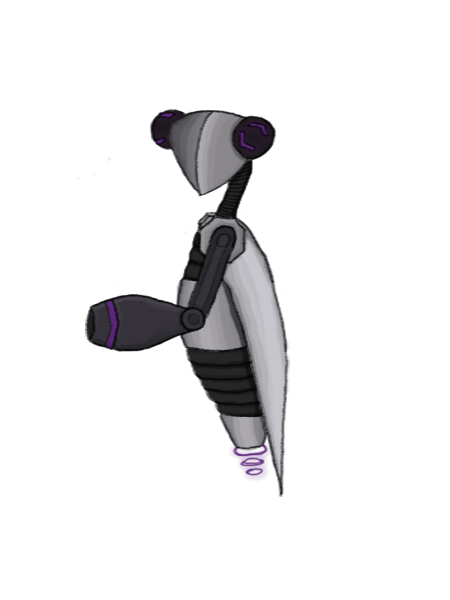
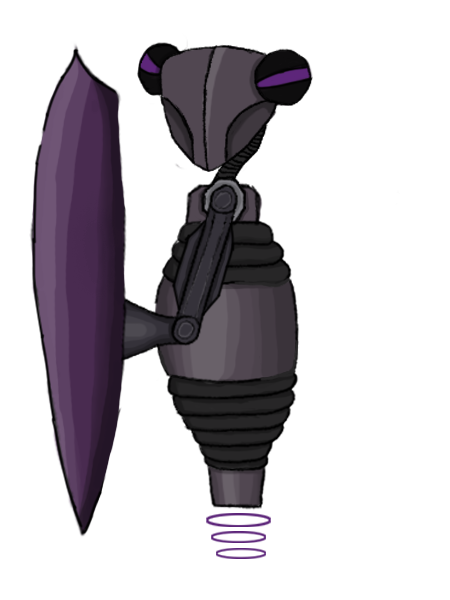
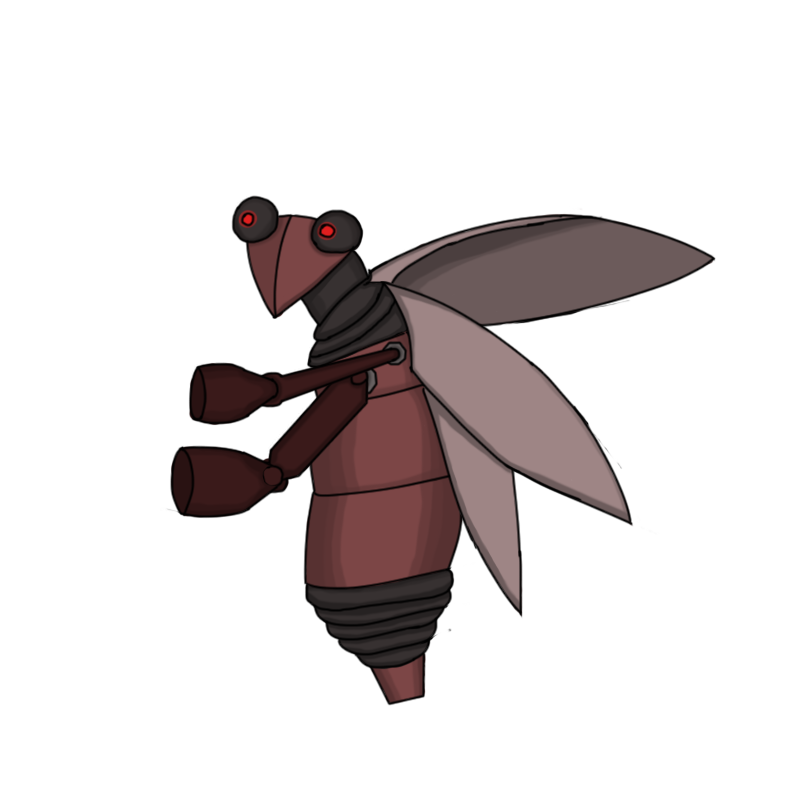
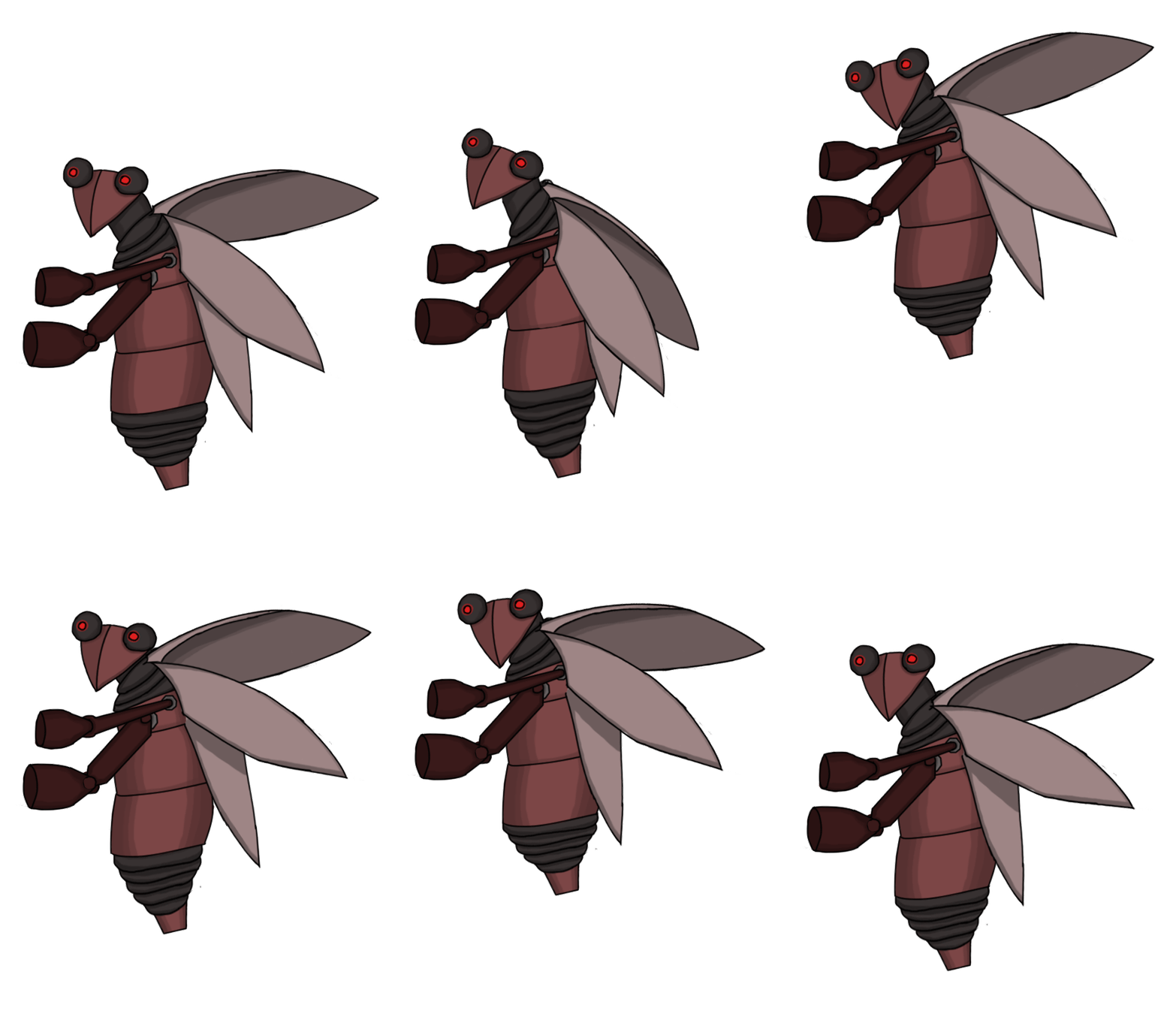
Our group’s version of Friendship Down features an antagonist, robotic species that make up the game’s enemy units. For reasons of time, we had to cut any boss fights from development. Because of this, we had to make as much use of the enemy units as possible in order to provide some form of gameplay variety, as well as an escalating sense of progression over the course of the game. There are three enemy units, each with their own specific role: a standard, weak, cannon-fodder-type unit; a high-health, defender unit that positions itself at the front lines to attempt to soak the player’s projectiles; and an aggressive, dangerous unit that must be dealt with to prevent it from wreaking havoc. My task, therefore, was to design these units to be as obviously representing these respective qualities as possible. The designs are shown below.
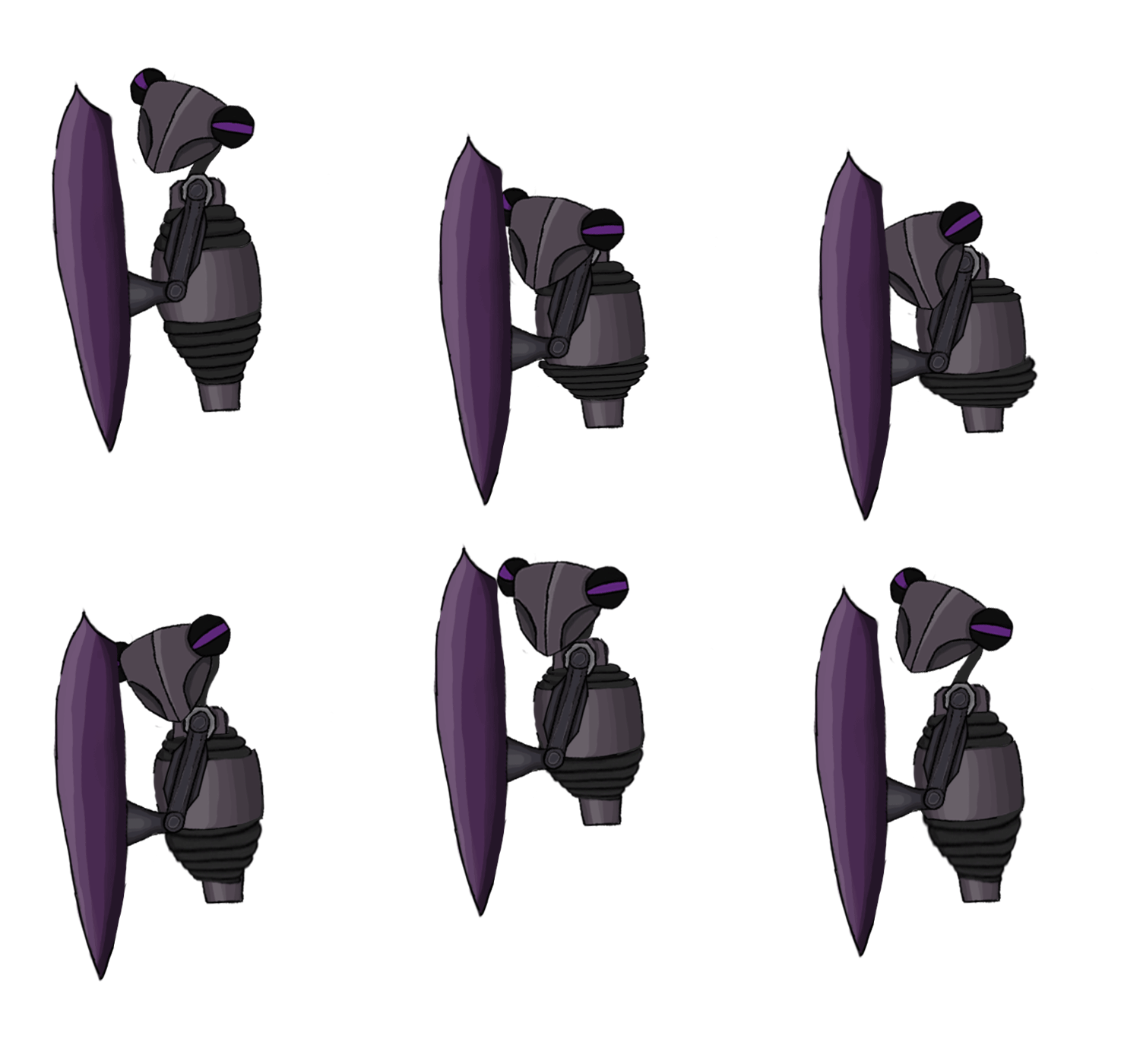
As one hopefully can identify, the silvery one is the basic, the purplish one is the tank, and the red unit is the aggressive one. Trying to be a good citizen by following the learning outcomes of various game design courses, I actively considered the shapes being used to give each unit a distinct, representative silhouette. The basic unit was intended as just that: basic. It has no over-emphasized features, relatively expressionless eyes, and modest colouring. I wanted this simplistic design because I derived the designs of the other sprites using this base model, designs that I would then make alterations to. I found this approach an appropriate way to include some form of progression through the game, as they player would be able to see how the enemies evolve into more dangerous, specialised forms. The tank unit I gave a noticeable frontal shield, as well as a bigger head. I intended this to be reinforcing the blunt, heavy, and overall durable image of the character. In terms of colour, the darker, purple tone made it appear denser than the standard unit, as though made from a stronger material. When animating the sprite, I used slow, sluggish movements to make it look heavy – almost inconveniently so – as it attempts to thrust itself upwards.
The aggressive unit, dubbed by me the Crazed, was to be as close to a boss encounter as it could be. I desired it to be almost freakishly intimidating. For this reason, I consciously upset the symmetry of the sprite: its head is crookedly leaning outwards, it has triple wings, that are extended, and has double cannon arms. From the shape and outline alone did I want it to appear insane, erratic, and unpredictable. The red hue of the body and in the eyes also signals danger and volatility. This is the only unit that uses its wings for movement in the animation cycle. I enjoyed how the flapping motion on the descent also makes it appear unpredictable and untamed.
In summary, my ambition for the design of the enemy sprites was to make each one visually communicating its gameplay functionality just from appearing on the screen; the player should be able to some extent deduce how to approach the enemy as soon as it first enters the playfield, even before any action is taken.
__________________________________________________________________________________________________________________________________________________________________________________ Blog post comment Greetings Hanna, (William Teurnell, Team Poltergeist) I enjoy the effects you are reaching for. You go into good detail on your thoughts and processes, and your decisions are clearly motivated. You explain the impact and intended meaning of your visuals, and you let the reader know of its significance. It was interesting how you recognised and worked around the fact that there was no animation by creating a sprite that appears caught-in-motion. I liked the end result for this reason; it looks dramatic. I was part of the group that made this concept, and therefore I know well the aesthetics of the game. However, some readers may not. Perhaps it could be in order to touch somewhat upon the core aesthetics of your product so the reader has some sense of context. This would also give you substance to go into why a dramatic, mid-motion, type of sprite is appropriate. Keep up the good work – it’s fun to see one’s concept brought into existence. William
 |