2018.02.22 – Agile-ish Game Development w/ Scrum
A primer on Scrum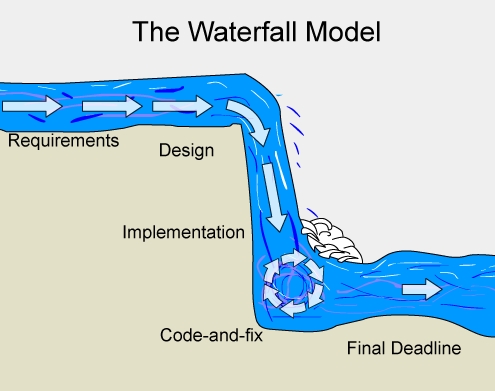 Today we will be tackling a topic many of your may have heard of, SCRUM. Some call it agile development, some lean, others yet have referred to it as Kanban practices. All of them are fulfilling a certain need to move away from traditional management, often called waterfall management due to the way it plans, schedule and executes projects. SCRUM has been the preferred management methodology for software development for a while. However, it has only “recently” started making its way into the gaming industry. The core philosophy revolves around iterating over the same product and continuously deliver a stable version (release) of it after each iteration cycle.  It also aims to empower cross-disciplinary teams to work more efficiently together to create value for the client/product owner, as well as highlighting costly problems in the production pipeline one may overlook when the disciplines are working separately. Implementing Scrum in student production groupsUsing some of the scrum methodology in our group has helped straighten out the production pipeline and improved communication between team members in regards to feature development. On the flip-side, most of us were not familiar enough with Scrum to implement it correctly, or fully benefit from its core principles. Therefore I would consider the first production a trial run for using Scrum as a successful failure. In other words, it presented its advantages while allowing us to fail quickly and learn enough about it fundamentals to properly use it during our next project. While this situation is evidently less than ideal, the progress it enabled for our workflow has been invaluable. Coming from a traditional management background and having now read up on the topic (Agile Game Development with Scrum by Clinton Keith), I can say with confidence that the scrum methodology brings more advantages to the teams who will decide to use it, than it has drawbacks. This being said, it is important to keep in mind that Scrum is a highly flexible framework which needs to be adapted to one’s working culture. It is this adaption that will lead to better development practices in the long run.  |
