Feedback Gathering
|
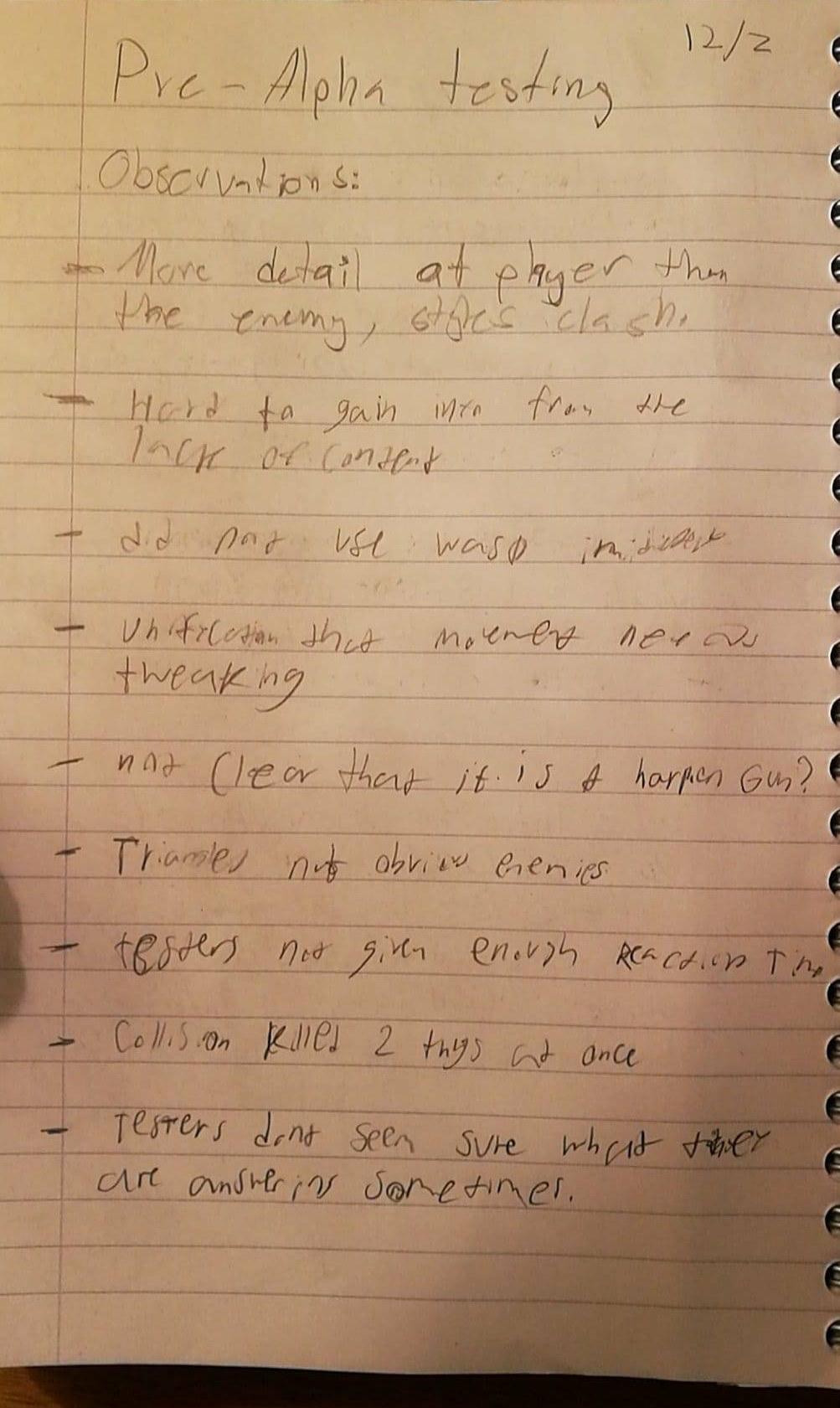
So last monday (02/12) we had a play-testing session class where we could test all the other teams games and give feedback. I won’t go into much detail on the playtesting and the results in and of them selves since we are to write a post with playtesting as the topic later. What I will write about is my teams approach to gathering data from testers and my task in this as lead designer. I monitored our game during the whole play-testing session, while this meant that I didn’t get see any of the other teams games it was a trade-off in order to get consistent data. Because while we had a survey for our testers to fill out after they got to play our game, in order to get a deeper layer of feedback I observed and took notes on how they played our game. What I mean by “how they played” are things that they would do subconsciously that our survey had no way of gaining feedback on. Things like initial reactions to the game, how they would try use our control scheme, and how this influenced their answers on the survey. I essentially tried to make up for the weaknesses that a survey or just asking questions directly usually have. So while writing a summary of the survey results I don’t just take everything at face value by taking my observations into account.
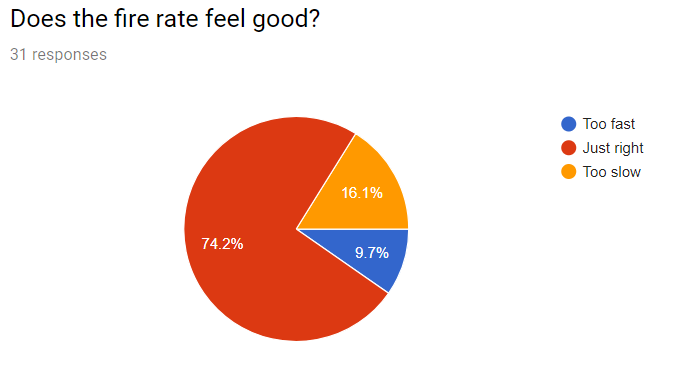
My observation notes and an example of the kind of feedback we received. I decided to observe our testers because there usually seems to be some kind of disconnect between how testers act when they play the game and what they answer on the survey. A prime example of this is how some testers would frantically click the mouse to shoot even though there is a large delay between shots, and then give feedback that the fire rate was too slow. Implying perhaps that they came in with an expectation that there would be a much higher fire rate and this could have impacted the survey answer. To tie into last weeks post, I now plan to use the feedback to construct new user stories. I think it will be an interesting approach to make both the feedback and user stories improve our game further. If this turns out to be an effective way to improve our during the coming two weeks then I will expand upon it further after the next play-testing session.  |