Animating Deino
|
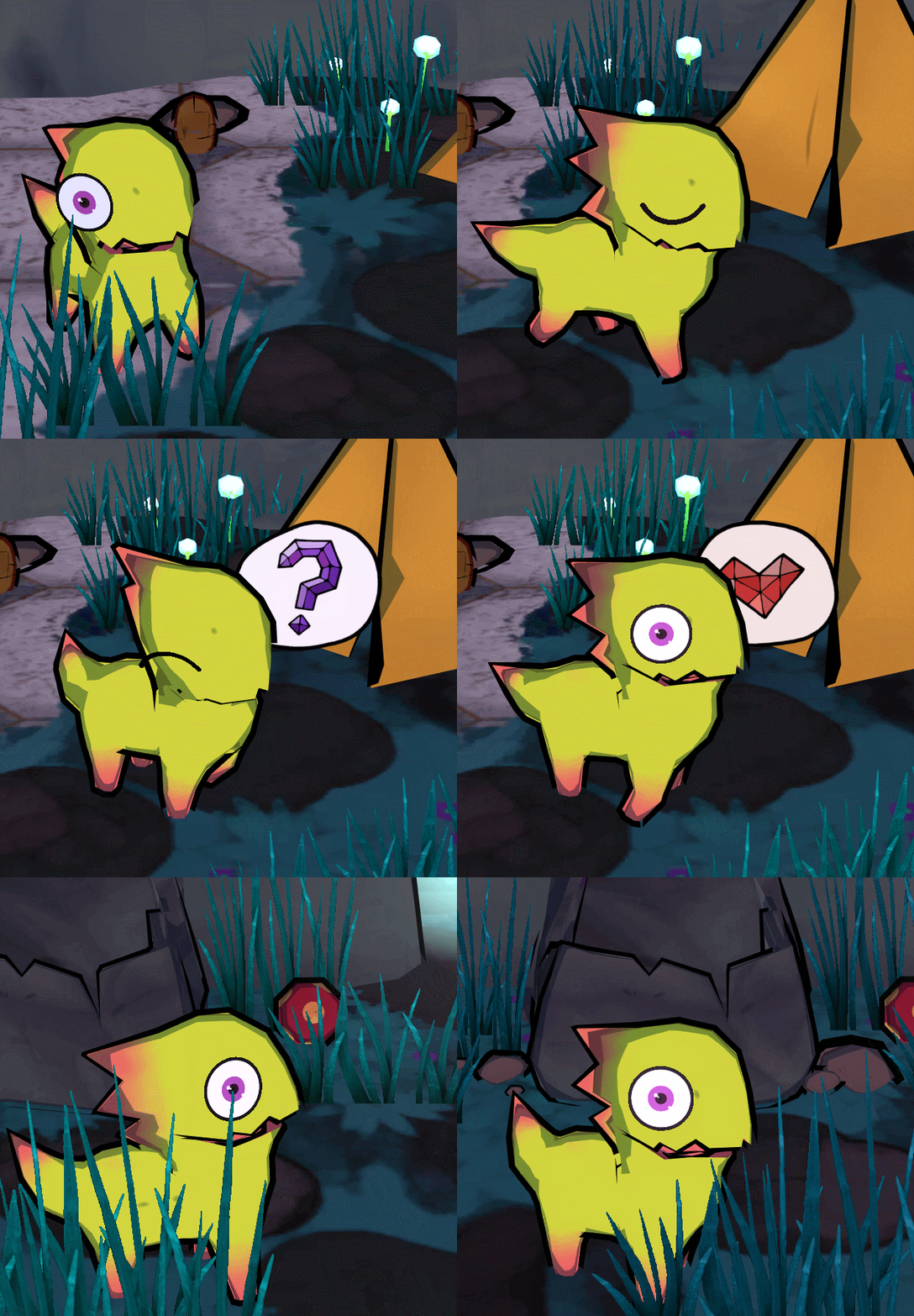
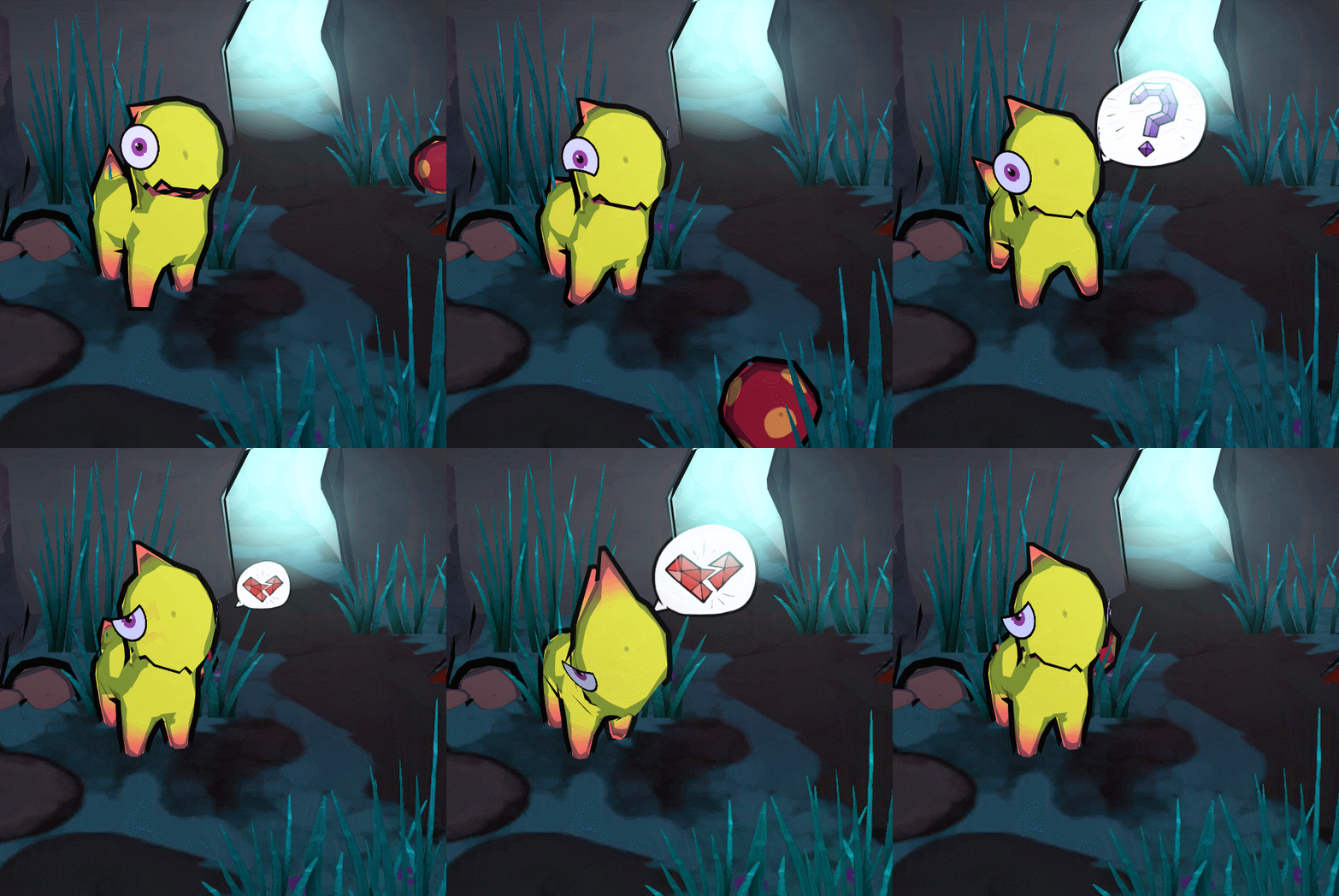
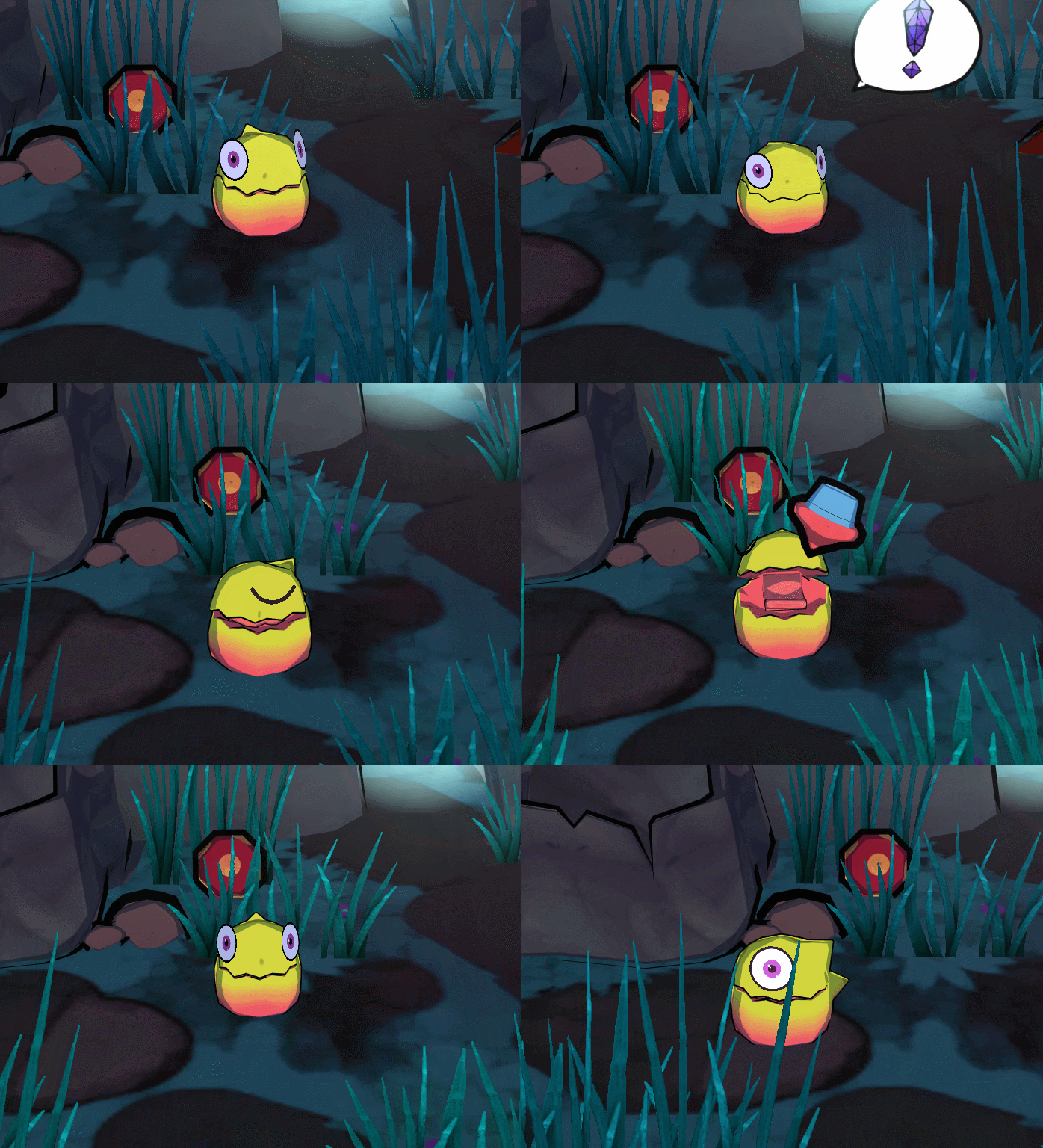
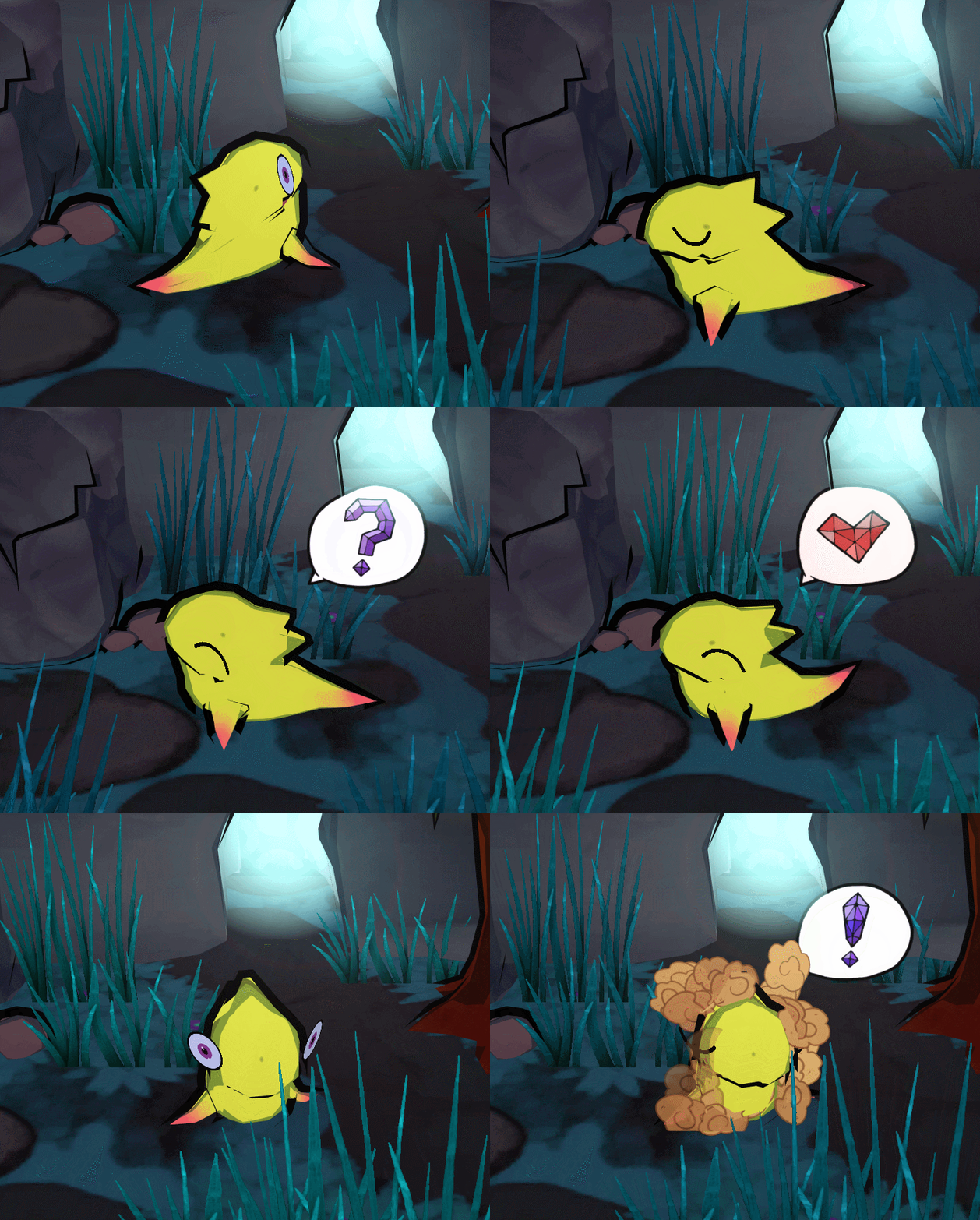
It’s funny, because when I fist opened and ran the program Motionbuilder, I was horrified at what greeted me on the screen. So many options, so much to learn, so many windows… It was a daunting task to say the least. I’ll be honest, I didn’t do too well on the course that was meant to teach us animation in 3D. I had a difficult time keeping up and I was really struggling getting used to the software. Funnily enough, working on CritterFlux, I ended up in charge of the animations and 3D models. Admittedly, I put off the seemingly gigantic task of animating our critters until the very last minute. The longer I waited, the more it became an obstacle, growing more difficult to overcome every day. Eventually, I pulled myself together, took courage and opened up Motionbuilder. The motionless creature stared blankly back at me, it was my job to make it come alive! Unfortunately for me, the software wasn’t too keen on the fact my critter was four-legged with bones unfamiliar to humanoids, and my computer was riddled with various and myserious bugs, just getting to a point where I could actually get started caused me a lot of pain. I wanted to animate the adult version of Deino (codename for our critter) using a control rig as that’s what I was used to from earlier projects. After a many hours and intense headache-causing sessions trying to find various solutions to all of the problems that rained heavily upon Deino, I managed to work around them (I wont go into too much detail as the headaches may be infectious). I took inspiration from pets, mainly dogs and cats while I animated the characters in CritterFlux. For the juvenile version of Deino, I looked at seals and how they drag and pull themselves forward. I was particularly thankful for my upbringing with animals, I found it helped me immensely with providing our critter with credible body language. I found the tail makes up for a lot of the animal’s personality, it communicates feelings and goals. It was a challenge animating something with four legs for sure, the walk cycle took the longest time to work out, but it also turned out to give the critter a lot of personality and character. I was grateful for (and completely fed up with) the giant tounge we decided to add to our critter. It too, in similarity with the tail, added a lot of information to the critter’s communication to the player. I learned a lot about animation loops and cycles, where to put the keyframes and how to give each movement weight. I also learned what animations are required to create and what ones can be skipped using blending, it’s actually not all that obvious to a beginner… To my own big surprise, I actually managed quite well with the animations and at the conference where our game was presented, they were rather well received. I could never have dreamed of it! I’m chuffed about them all and I no longer consider animations a big mountain to climb (or at least now I have my climbing gear ready). I’ll end the post with a sample of my animations in CritterFlux:
 |