Week 6 : Beta and the re-design of UI systems
|
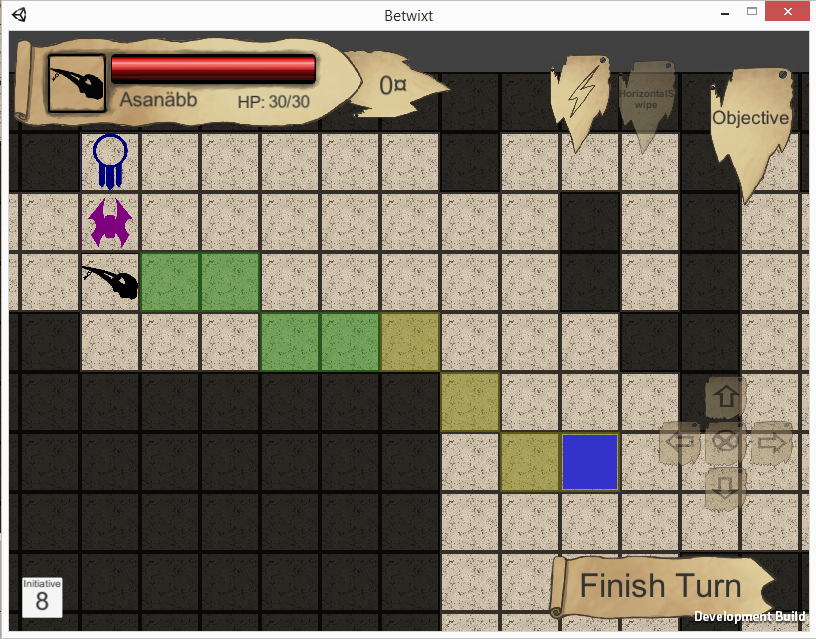
The pre-beta playtest has come and gone, lending a number of reviews with information we were mostly already aware of. However, this was still a critical event as this confirms the need for re-designing the game in some key areas, including the very system we use to move our players and let them take actions. This blog post will thus detail the design work done before the feature freeze to come, rather than the producer side of handling the beta process itself. At the inception of our movement system, players were required to commit to taking certain actions at the cost of action points. Once they had completed a set of moves, they were asked to confirm the same, then end their turn. This meant that in essence players who had no issues with deciding on their actions were still left with unfinished turns, as they either missed the extra confirmation button or would forget they needed to commit. The reason this system existed in the first place was as a placeholder for future development, but at the core of the issue was the fact that players could take very different actions, both moving and attacking out of order, if they so desired. While this gave players more freedom in terms of strategy, that freedom was still limited by the fact that we were not giving them all that many points to do anything beyond a short set of moves or a quick burst of attacks. A solution to this could have been to afford players more points, but that would affect not only game balance but lengthen the planning stage, as more actions would require more time to think about what to do. This would have been fine in a game that was not multiplayer-based, or focused on achieving a certain lower playtime, but not for what our game was aiming for. So instead, I and the lead developer adopted a system akin to the one employed in the new X-Com. Here, players would be able to move 4 squares in any direction, or decide to move 8 without a chance to employ an attack. No longer can players attack more than once, but must instead use positioning to gain an advantage for future rounds to take down enemies with greater health. This also meant that players no longer got “stuck” near throngs of enemies without recourse, but could instead run away from their plight (possibly behind the other players, lending another source of paranoia). At the same time, we removed the need to ”confirm” a turn, saving each choice as it was made so that if a player got stuck pondering what move to take next and their timer ran out they would not lose their intended “progress”. This cut down time played by 5 minutes and produced less frustration among playtesters.
 |