Making footstep sound effects
|
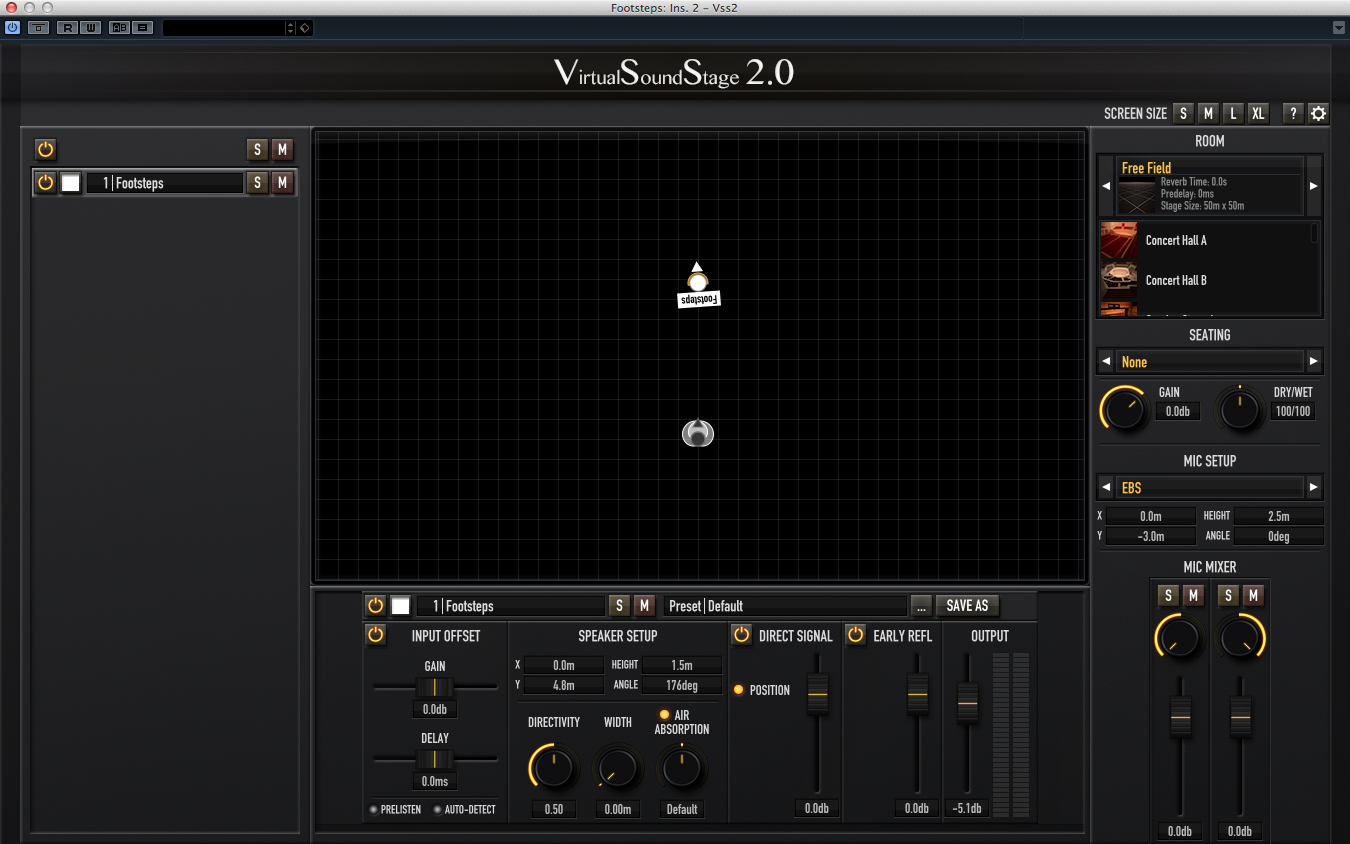
In the current course, we are creating a game based on another group’s concept. My group chose a concept called Fancy Mansion, in which you play as a burglar and have to find valuables while avoiding the owner of the house, Mr. Fancy. This week I have mainly been designing sound effects; footstep sound effects. These sounds will have an important role in gameplay as the player will listen to what kind of footstep sounds come from Mr. Fancy and hence know what kind of floor he is walking on, which will give an indication of his position. I started by listening through all the footstep sounds of a sound database that the university provides for all Game Design students. As decided in the concept, three different type of footstep sounds are needed: wooden floor, stone floor and carpeted floor. I figured the easiest would be the wooden one because it could easily be made recognizable among the three by exaggerating the creaky part of the sound. (I am yet to decide how to enable the player to tell the stone and carpet sounds apart. Possibly I will just make the carpet one really faint and the player will know that when there’s very little sound at all, Mr. Fancy is walking on the carpeted part of the floor.) So I started with the wooden one. I found a suitably creaky one in the database which I suspect is actually sampled from a staircase and not a floor, but I think it works fine anyway. This original recording straight from the database can be heard here: I then imported it in Cubase 7, which is the software I normally use to compose music. The raw recording is obviously recorded with the microphone fairly close to the source, which means I had to alter it for it to sound somewhat convincing as the footsteps of the man you are sneaking around to avoid. I messed around with different effects and ended up with two different reverb effects on it. One standard reverb and one called VirtualSoundStage (VSS), which is used primarily on orchestral instruments to artificially place them in a specific spot of a room such as a concert hall or a scoring stage. The result is this first draft: For the time being I was satisfied, but after a while I realized (as one of my teammates also pointed out) that it no longer sounds like a wooden floor but instead slightly metallic. This is beacuse one of the effects give the sound a reverb much more prominent than one would expect to hear in a house (or a mansion for that matter). So I removed that backfiring reverb effect which left me with only the VSS one. I continued experimenting with settings and other effects until I settled for a very simple solution: I kept only VSS and removed the reverb part of it, letting it work as only an artificial microphone distance. (This is done by selecting a “free field” instead of one of the preset rooms, which essentially removes the walls.) The VSS interface is depicted below; the lower icon in the black field is the microphone, and the upper one is the sound source. The observant can see that the little header text on the source is upside down. This is because I turned it to face away from the microphone as I preferred the result of this for some reason. Whatever works.
The result can be heard below. I still call it a draft because I will experiment with the sound effects that can be added with code in the game engine, as this may present a way to make the sound dynamically respond to the distance between Mr. Fancy and the player. I will also split the sound files into individual footsteps for added versatility.  |