The Explosion And The Aftershock – Postmortem (Updated 30-04-2018)
The Main ExplosionIt is finally time to harvest our crops after much work, our game is finished and after everything is said and done, it is not half bad. What we showed at the golden playtest session was a polished game with not too many apparent flaws. The final iteration of You May Kiss The Bride is a top-down, semi-isometric 2D shooter and looks little something like this: 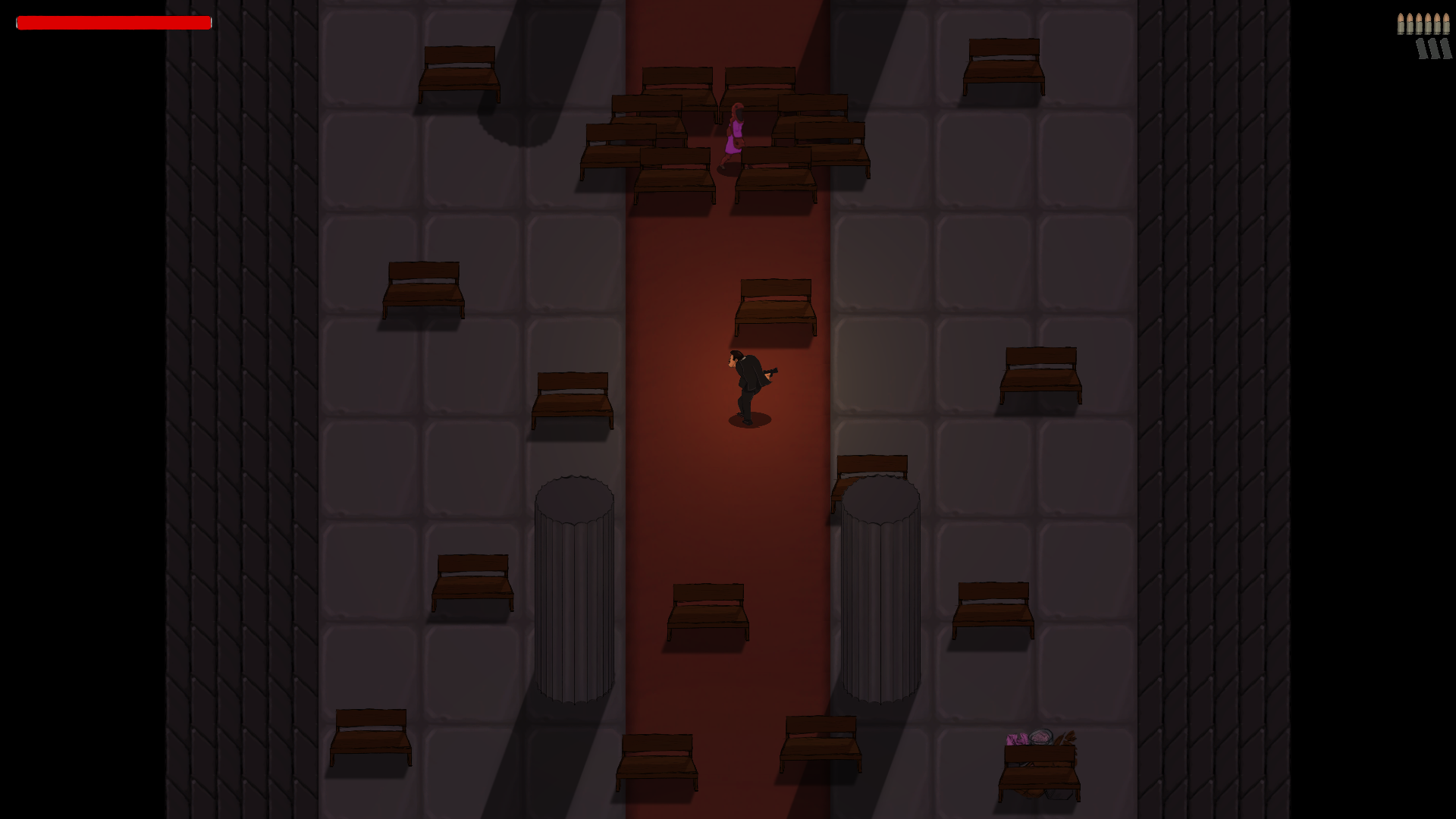 The player plays as the character Brad, Brad is having bad dreams regarding his wedding and does not want to get married. As Brad is about to be wed he decides to run away since this is not what he wants, this angers Brad’s bride, who in turn transforms into a demonic banshee that chases Brad. Brad is now forced to run for his life, shooting his way through the hordes of demonic guests that try to stop him from escaping. The game is set in one place, the church that Brad was meant to get married in, but it is in a demonic state. There is only one level in the game and the objective of the game is to reach the top most part of the level, traversing between benches, holes, fires and enemies that either swing their arms or spits tar from their mouths. 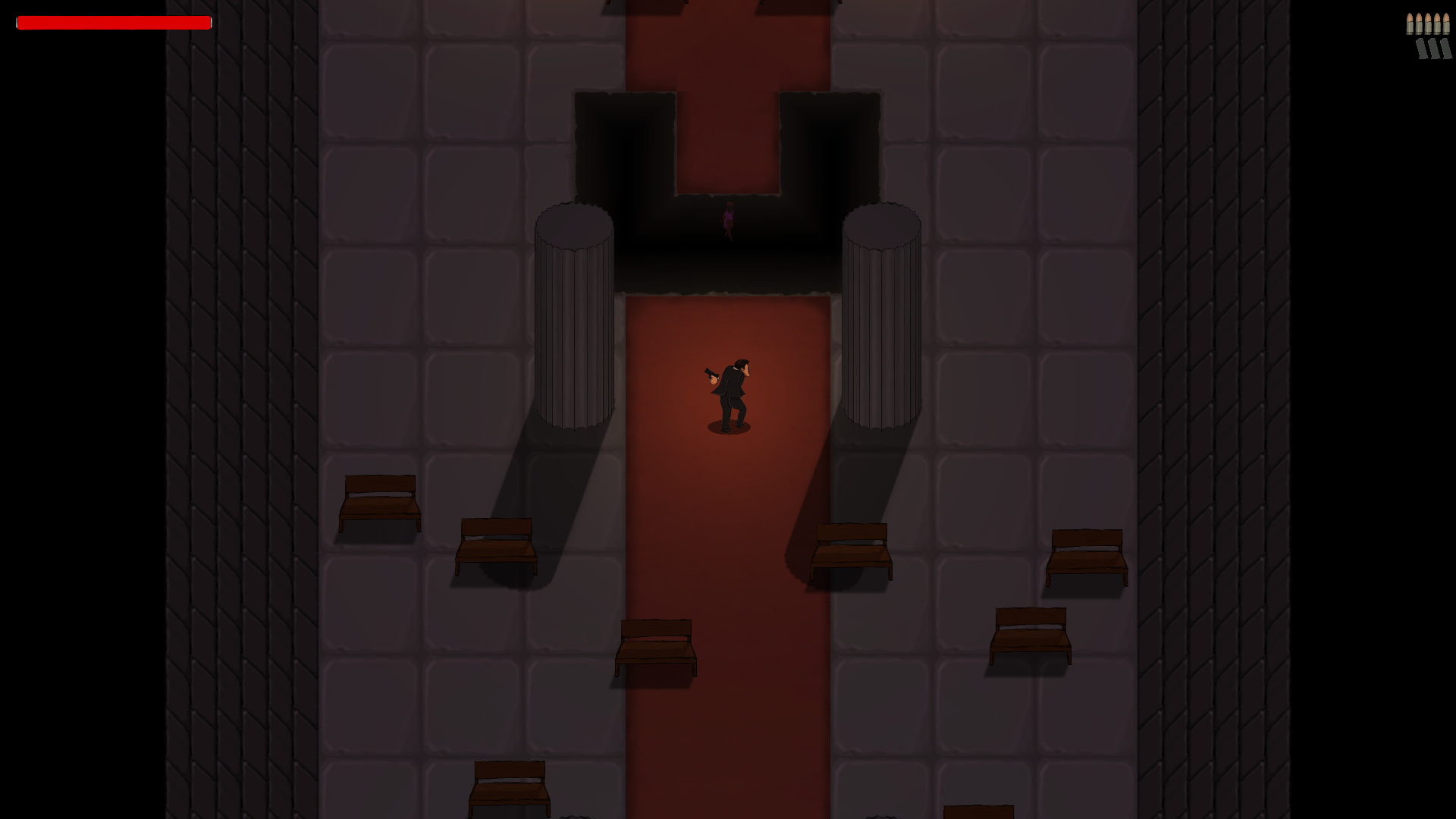 Right after the first hole in the game, I try to teach the players how fire works, the fire tutorial works in two stages 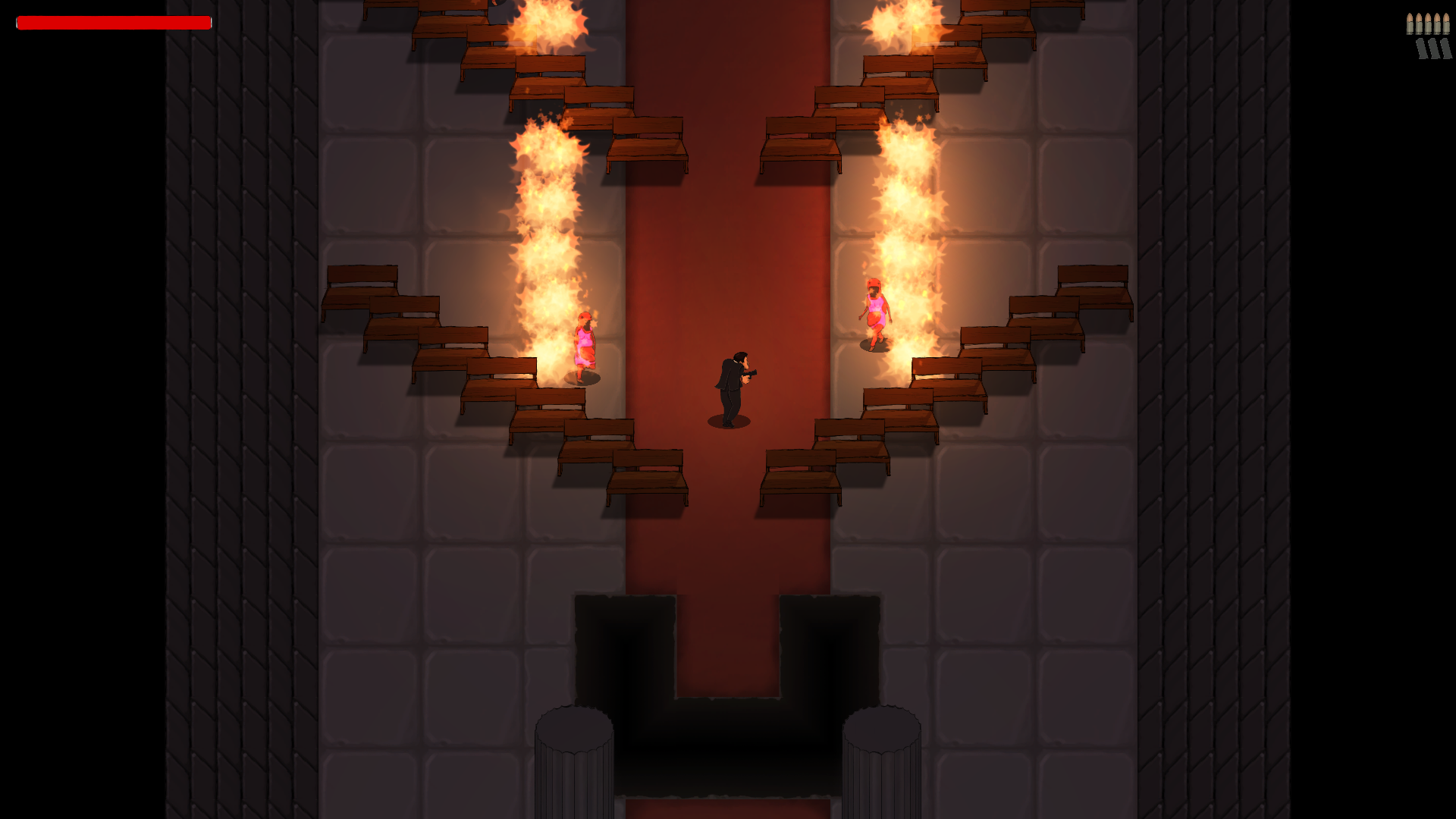
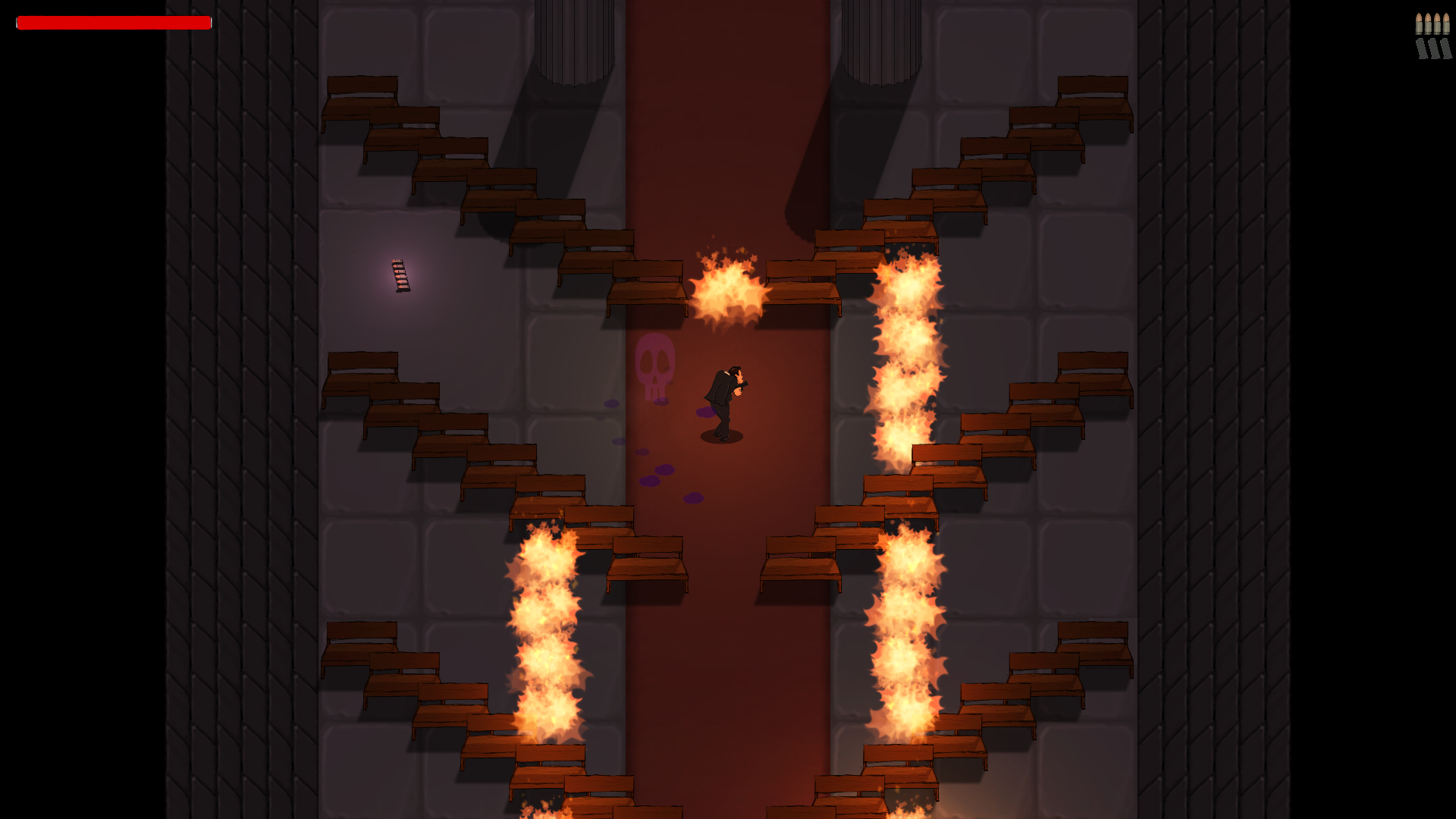 The last tutorial of the game is meant to showcase the pick-up of the game. The pick-up is a one-time use item that freezes all enemies, including the Bride, that is around Brad. 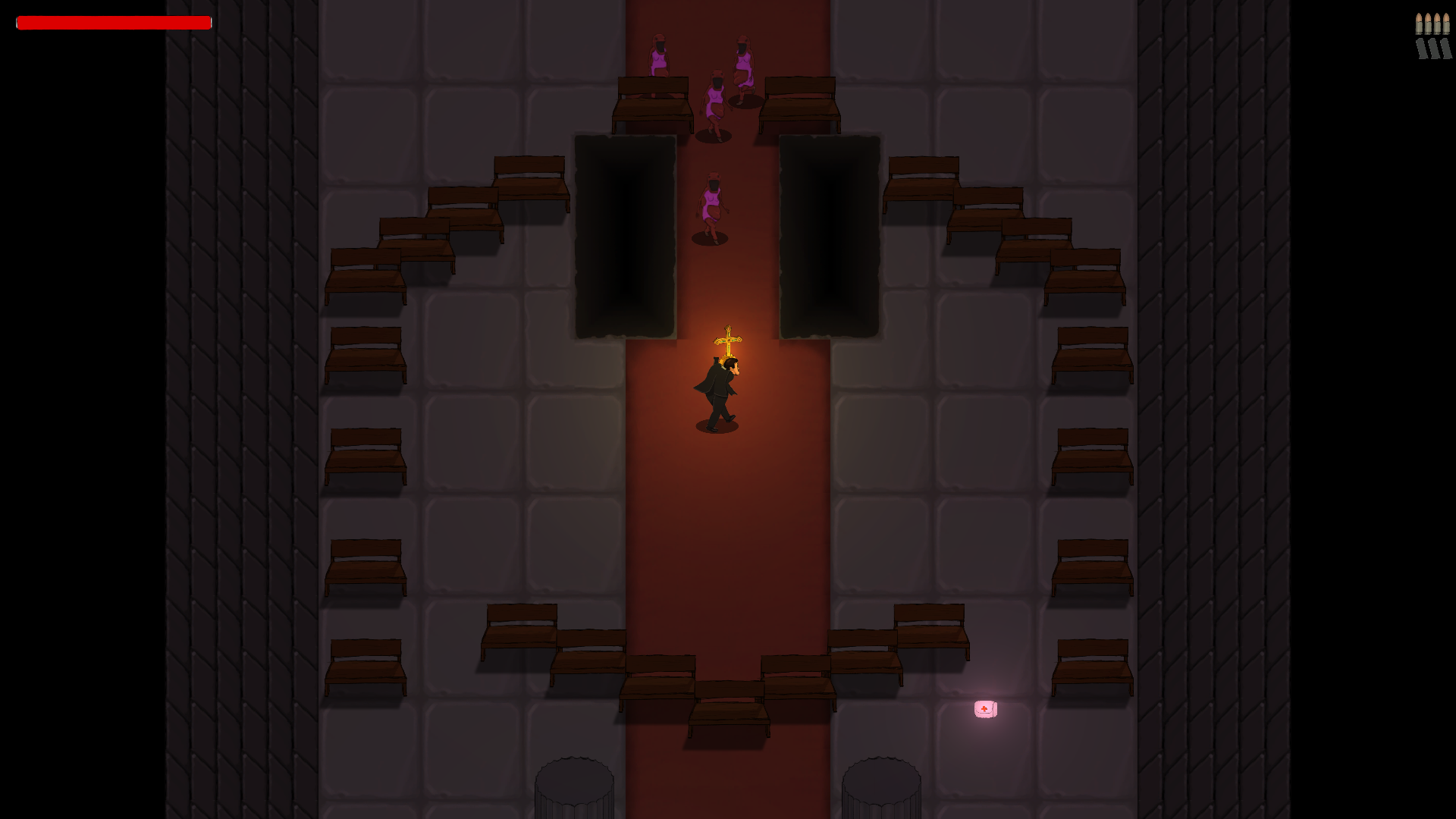 The Missing PiecesNot many testers were hit by the melee only enemy in our game, but those that did received varied results. Some testers were pushed further than they should have, seemingly teleporting them a small distant, catching them off guard. My main suspect as to why this bug happens would be that if the player got hit by two melee enemies in quick succession, the two forces makes the player get pushed back the ‘correct’ distance but not in the correct amount of time. Some other things that are not correct are the number of features our game was meant to have, we missed some to say the least. Well to be fair there are not too many more features in the concept document than there are in our game, but i digress. We were meant to have one more enemy, one more hazard, a boss at the end of the level and the melee enemy was supposed to be a man, according to the concept. Ooh boy, the level design, my sweet summer child. I have not had too many lectures on level design, I think it racks up to about 3-4 hours in total. The game’s level design was completely up to me, everything is manually placed, every bit carefully constructed so that the player could either play it safe or play the high risk/reward style. Now I say “carefully“, but to be quite honest, I had no clue whatsoever as to what I was doing after the tutorial part of the level. Most of it are just patterns made out of benches and then fires replaced some benches to create shortcuts, it is a mess quite frankly, but somehow it worked out. Now I did not hear it personally, even though I stood right next to my game the entire day, but apparently I got high praise for my tutorial from Jerry, yay! 
Our game was considered one of the most difficult on the “show-floor”, with only 9 people completing the game. With over 40 participants it is not hard to see why people thought that. While not everyone that played our game answered the survey we had, there are some facts that I am quite proud of, kind of. The first being that 85,7% of those that answered the survey reached further than 70% of the level. With that in mind, 82.2% gave a 6+ in difficulty out of 10, which means that people thought the game was challenging but they could still reach the later parts of the game. Speaking of difficulty, if you have not read my last post; Test, Test and Then Test Some More, The Great Regret, I highly recommend it, it gives more insight on the upcoming segment, it is however, not necessary. The AftershockWhat I immediately learned from watching people play my game was that nothing is obvious, they have no prior experience with the new features that we had, why would the new features’ functionality be obvious to them? this was most apparent with the newly added fires, the enemies walk through the fires and they die, so why would the player not meet the same fate? Almost every single tester that had not seen other people play the game before them did not proceed beyond the first fire obstacle on their first playthrough. The first fire obstacle is meant to teach the player that they CAN walk through it, they just take some damage from it and then they get a healthpack right afterwards, simple, effective. It would have worked fine if it was not for the simple fact that the healthpacks were places outside of the viewable play area, which meant that there were no incentive for the player to walk through the fire in the first place, except for the fact that the only way they can walk is up. I am not a very confrontational person, I do not speak my mind unless there is something that really bothers me. In the case of our game project, I held my mouth closed far more than I should have, I am supposed to lead my team in the same design direction, but that is impossible if I don’t speak up, even against the small, seemingly meaningless issue. It would have saved me a lot of headaches from hearing the words “I assumed…”. Tying in with the last two segments, I should ask for help more often. I am a part of a team, I do not need to do anything alone and I should especially not do playtesting alone.  |