5SD064 – Blog Post 5 : Playtesting
|
This blog will be about playtesting and its impact on development. My perspective is that of the sole programmer for team “Troll”, working on “Depth”. Playtesting is two-dimensional : there is an internal dimension and an external one. Internally, group Troll playtest the game whenever I implement a considerable amount of stuff in, or at the end of each sprint. In fact, playtesting plays into our definition of “done” for artifacts. Indeed, our definition of done is that it has been playtested and greenlit by every member. This allows me to find bugs in my code quickly, as well as just get feedback on variables like player speed, monster speed, etc, that I can then adjust. Additionally, it gives the group a sense of progression : artists can see their work being put to use, I can get feedback and praise from my team, my project manager can see that we’re on schedule and my designer can see his ideas being implemented. It therefore kills two birds in one stone : morale is heightened and the product’s quality increases. Externally, though, is where the metaphoric meat of playtesting lies. Since we are always in contact with the game, it becomes hard to be objective and to realize even fairly common mistakes. This is where playtesting externally comes in handy : we get feedback (sometimes harsh, which is also hard for us to give) from outsiders who aren’t biased in our favour. We can see whether the mechanics are explained well, whether everything makes sense or not and whether there are bugs we didn’t notice or not. Of course, everything is not perfect. During the two playtesting sessions we attended, we often got feedback on placeholder items (white boxes for walls instead of rocks looking ugly, for example). However, for each of those useless remarks, we identified at least two problems. 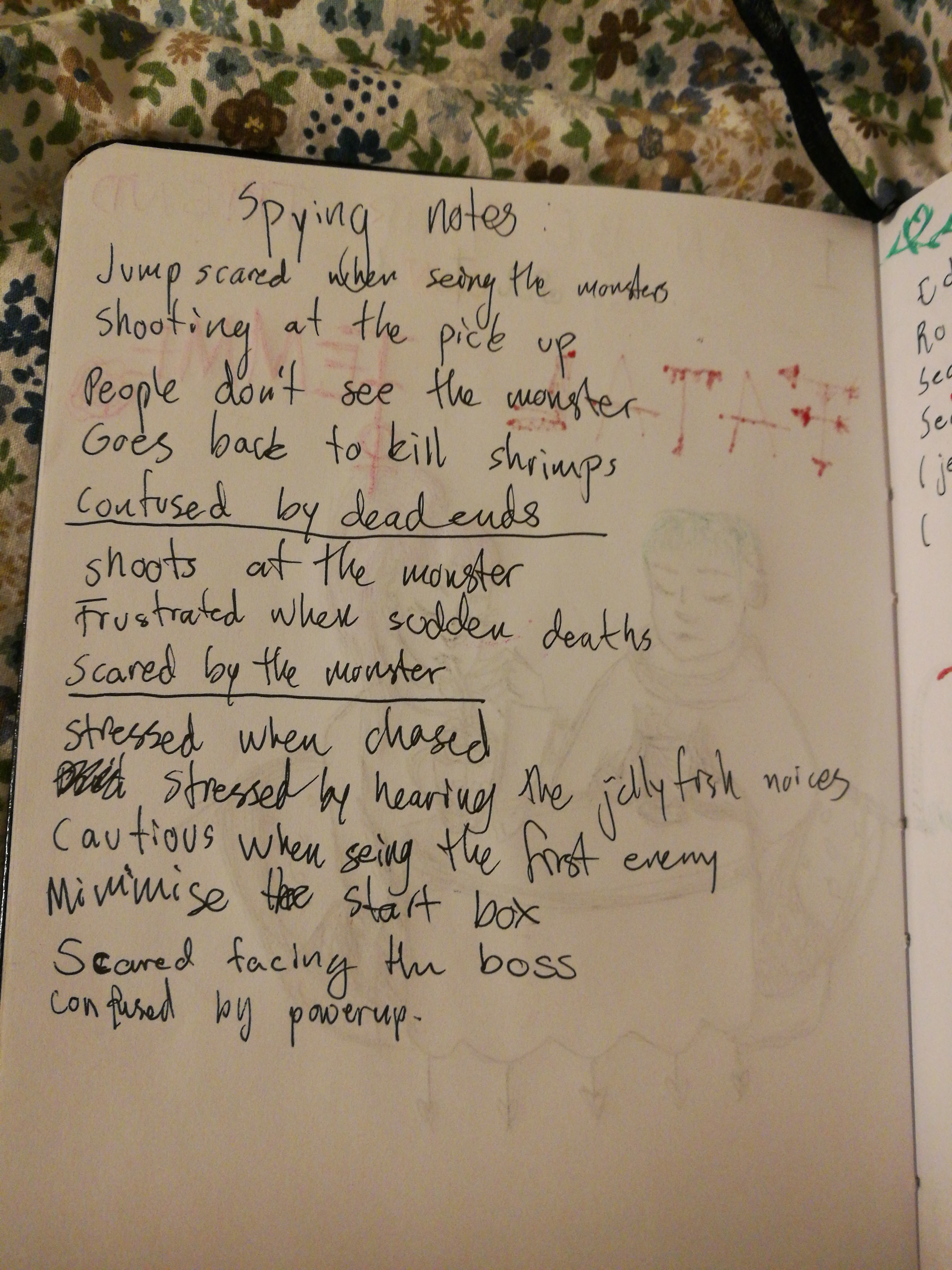 I can say without hesitation that external playtesting, although sometimes tedious and time-consuming, is worth the investment tenfold. Without it, our version of “Depth” would be confusing for anyone but us, bug-ridden and generally unpolished.  |