Entry 3: Sum of Scrum
|
Hello, and welcome to another week of blog posts! Today I have for you, dear reader—you guessed it—a blog post about Agile SCRUM work method. My name is Jesper Karbing, and I´ll be your post today. I have some mixed feelings about Scrum thus far. It has been a big help with structuring and keeping track of your weekly work load and plan. My main concerns with Scrum are twofold:
I think it´s a great tool for keeping track of other group members´ progress and better synchronize the group effort. User Stories was something we did not all go over in class, so we have almost altogether put it aside for the time being. We are not sure how to implement and make effective use of it. This is how an average sprint looks for Group Jabberwock Monday – Each lead role puts items from the current upcoming deadline backlog (alpha, beta or release) into the Sprint Plan. Each area is color coded to easily distinguish the types of work. This is done in preparation for the Sprint Plan Meeting that is held after lectures. All group members must attend and present their plan to the Scrum Master (or Overlord) . Any possible issues are discussed and assigned a solution or a Plan B. Tuesday – Stand-up meeting at 10:30 over Discord. We work individually and communicate our progress and share assets as we go. Wednesday – We meet on campus and work together as a group. This way we are able to quickly solve minor problems, clearly communicate ideas and make it possible to discuss Quality Assurance directly. If the need arises, we hold a review meeting to work out bigger issues or obstacles (but it has not been necessary so far, thankfully). Thursday – Same as Tuesday. Friday – *clap* Sprint Re *clap* view. Sprint Review! Prior to the meeting every individual group member specifies in the Scrum document how many hours they spent on each item in their plan and in what stage of development it is. We present these to the Scrum Jesus, who was resurrected three days following the annual chocolate egg hunt. We bring up obstacles we encountered, how we overcame them and how we are planning ahead for the next sprint. The Weekend – This is supposed to be our time off, where we get to relax, work on other assignments and get ready for the coming Sprint Planning on Monday. I tend to use this time to have a lot of anxiety and start on upcoming backlog items ahead of time. 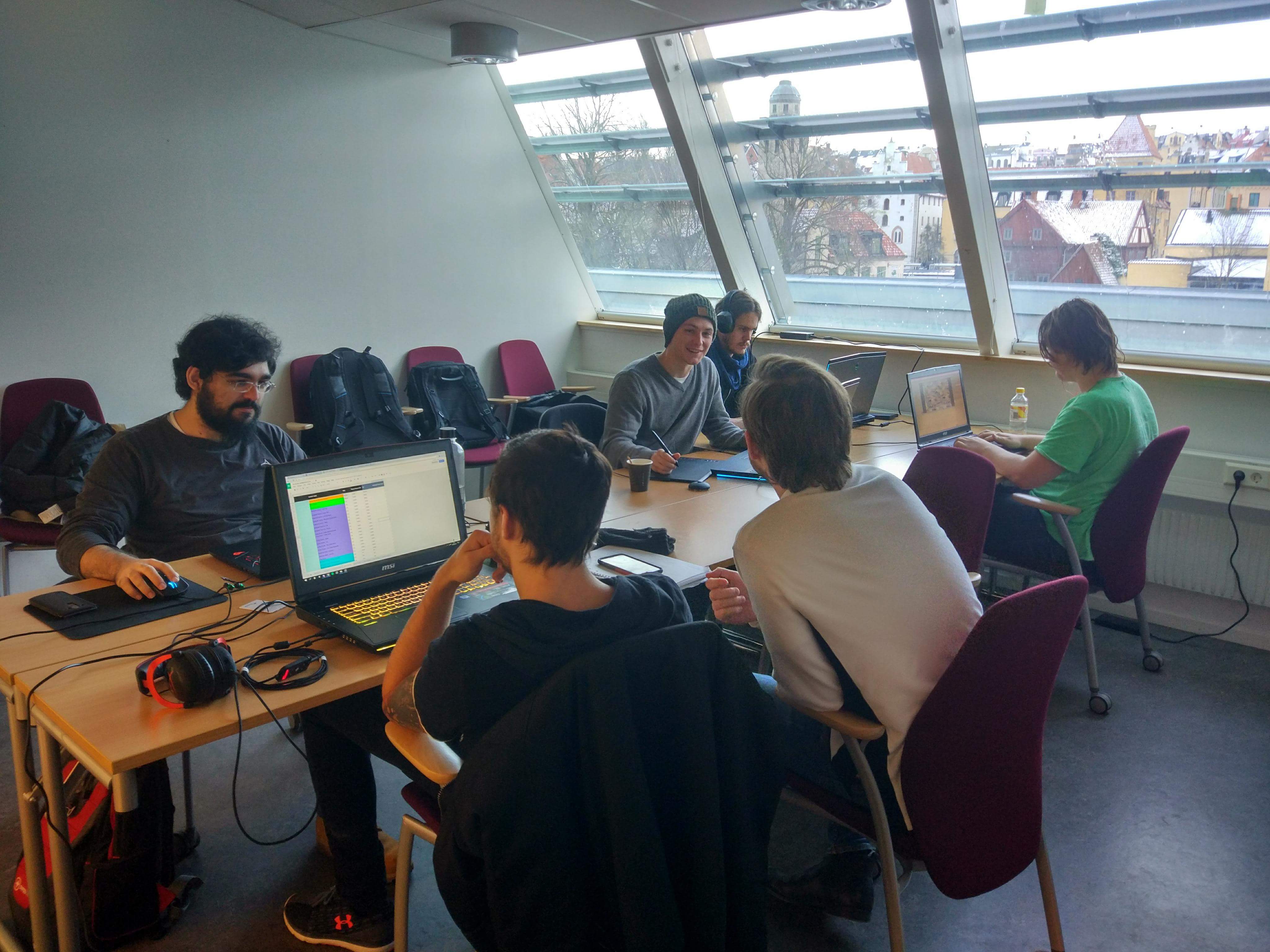 This rigid schedule allows for great efficiency, easy communication and structure for the group as a whole. It works as long as everyone cooperates and nothing unforeseen occurs. The most valuable result I have received through Scrum is productivity, and as an artist that means everything. I have managed to stay ahead of schedule and polish early assets. I think this has to do with Parkinson´s Law, which states that a given task will very likely be completed in the time you give yourself to complete it. In other words, if you have a week to write a blog post, you´re most likely to post it at the end of the week. If you instead had 2 days to write it, it will be completed in this time instead, saving 5 whole days of inefficient work or procrastination. This is relevant to the short sprints. Having a month-long sprint that ends with the alpha-deadline would probably have many groups rush to complete assets in the final few days. Now we are forced to complete an amount of them every week instead, both minimizing the available work period and spreading it out evenly. This encourages efficiency and productivity equilibrium. I hope this gave you an insight into my opinions on Scrum and how it has affected my work. I wish you a lovely weekend, Reader! Peace.  |