Flip a paper prototype to digital in 5 days
|
To initiate works on the student shoot-em-up game project, and to open a group discussion about development, I prepared a paper prototype to specify movement mechanics and dynamics. Then I asked the team to flip the paper prototype to a digital prototype, using Unity2D and C#. The purpose of the paper prototype was to clarify the basic movement mechanics of the character in 2D Euclid space, whereas the digital prototype was requested to test the current abilities of the team to collaborate on a simple task, limited by 5 lines specification based on the paper prototype. If the digital prototype was delivered in time and met the specification, one would consider the project less risky, and vice versa. In result, the team adopted the paper prototype easily, however developing the digital prototype was with difficulties. The digital prototype was not delivered in time, and didn’t meet the expectations according to the specs. That results could indicate risks or potential bottleneck in the project, and proper responses should be taken. For example, taking an extensive course in Unity, or inviting an experience student for tutoring or leading on development, both seem to be reasonable solutions. However, when they are not applied in a sensitive manner, they may have some negative impacts on student group – the former could lead to early burnout, whereas the later may bring issues in group dynamics. To conclude this case, the prototyping method was used to probe the student team abilities in producing digital prototypes in Unity, and the results were used to evaluate risks in the project. 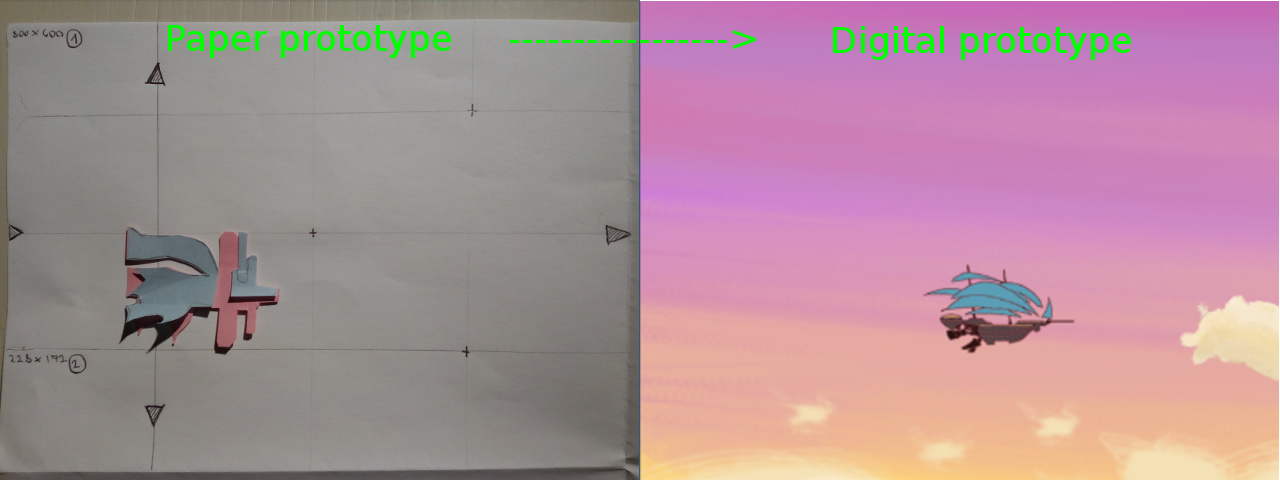 Why is the prototyping essential activity in game development? Game prototypes are simplified versions of a game, providing dynamic models. Prototyping is a core method used by game designers, developers, and artists, that generates not only testable prototypes. Working on prototypes, game developers go deeper in understanding of used models, and even improve them. Prototypes can be used to demonstrate focused parts of the game, as well as current skills of the team members. Some prototypes can test a feasibility of the game design or validate the concept, while assessing possible risks related to the development (see the case mentioned above). In design process, prototypes may help to discover new ideas, that work even better than original one. Moreover, prototypes can provide a basic topic for relevant discussions between team members – developers, artists, producers, and prototype testers. It’s not unusual, that one project generates many prototypes for different purposes. It’s a fact, that many prototypes have limited or very short life-time in video game projects, for many reasons. Prototypes often end either in author’s portfolios, project ‘s archives, or trash bins. There are two primary forms of prototypes – physical and digital. Former are fastest, easiest, and cheapest for developing, and anything from paper, glue, plastic figures, “piprensare” can be used to create them. What more do physical prototypes provide? First, it’s a real-time feedback to players, that can be helpful to detect some issues in the gameplay, or may help to generate new ideas. Second, other team members than programmers, or even their children, can contribute in development of meaningful physical prototype, and that collaboration may have positive effect on group dynamics and development. On the other side, the digital prototypes provide formalized models of core systems in the game, such us game logic, physics, environment, controlling, etc. While some of digital prototypes are supposed to be integrated to the game later, or build the foundation for further development, others can be used only to validate a specific part of the concept. Obvious disadvantage is, that creating digital prototypes requires technical skills, such as coding or creating placeholder assets. Technical skills are acquired through continuous studies, experimenting, or practitioning, that usually takes much more human time.  |