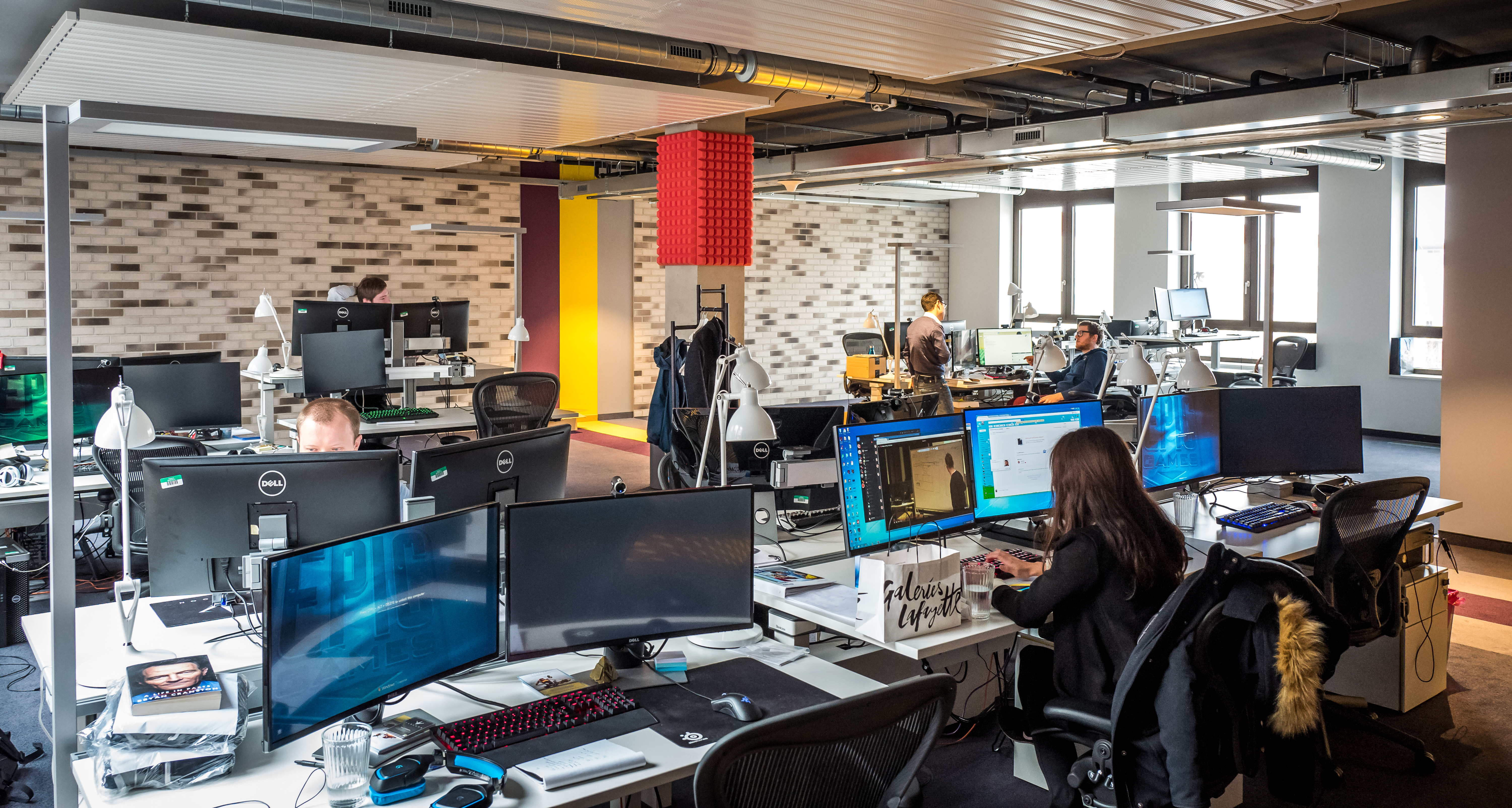
Work Space
|
My team started making our first game during our Game Design studies at Campus Gotland. It’s a side scrolling shoot’em-up about Bees and it’s mainly for kids. The team consists of 6 members: 2 Programming minors, 2 Graphics minors, 1 Design minor and me, a Project Management minor. As a project manager I am concerned with the success of the project. The success of the project is undeniably tied to the success of the team. So really, I am interested in the success of my team. But what makes a group of people a team and not just a random group of people? How do you forge a team spirit, define common goals and motivations or resolve issues? These are all interesting, fundamental questions, that I am not going to go into today. Today, I want to write about space. Work space. For me that means the architectural space and the culture with which work is done within that space. But why should anyone be concerned with work space? Don’t we all have great, open office spaces nowadays, where communication is easy and collaboration comes natural?
But is that assumption of increased communication, collaboration and productivity true or does the ideal office for someone that uses their intelligence to work look different? The topic of work space is not interesting because it is the long looked for solution that makes all your problems go away. No, work space and the impact it has on the team members is just overlooked more often than not, that is what makes it interesting.
Now why are those factors important and how can you apply them to your team in the confines of Campus Gotland? Team members are here because they are interested in, passionate about the topic of their work. They all come from different minors and have different tasks and therefore different workflows. This means their work spaces all should look pretty different right? The manager does not need to know how this final work space should look, a manager needs to make sure team members have the supplies, ideas and area to design their own work space. Programming, Art, Design are all tasks that are done by thinking. To think, most would agree, one needs quiet and some space. Space where you feel comfortable, safe and are uninterrupted. That is why DeMarco and Lister see a correlation between the performance contestants of their “Coding War Games” competition and the work area the well performing contestants have (the majority of the top quartile of performers has 10m² or more of dedicated work area). People that need to think to work, work better when they can think. Who would have thought? There is the concept of flow, which I do not want to explore to much here, which also argues for “intelligence workers” needing stretches of uninterrupted work time to focus on their work and become productive. Offering your team a space where that is possible for them is therefore very important. This includes some area for people to move in and desk space for them to work on. Additionally team members need to be aware of when other members are focused on their work and should not be interrupted. The work space ideally would offer a door for team members to close behind themselves, if they need to focus on a task. But the Campus Buildings of Campus Gotland are mainly designed for Lectures, meetings or studying. Getting sufficient space in form of a lecture room is seldom a problem. The problem is having to re-design the space for your work flow every time you enter a room. Since game teams in the course do not have a dedicated team room, members can barely personalize their work environment. Creating effective sound isolation in a lecture room can also prove difficult. While on one side of the room, the programmers discuss and solve a problem, on the other the designer discusses concept art with the artists. Both parties can not really focus since they are distracted by the noise the other party makes. This can be solved if the booked room is treated as a head quarters, that the team holds general meetings. Team members can then exercise their right in controlling the space they occupy by choosing what alternate space to inhibit throughout the Campus Building the head quarters room is located in. This way, members can choose a spot to do work that suits their mood and work space requirements for the task at hand, while still enjoying the possibility of quickly collaborating with members working on other parts of the game. Architect and philosopher Chrisopher Alexander promotes this philosophy of piecemeal growth when it comes to designing a space. A set of patterns or shared design principles should govern the growth (in our case for example: stay in the same building as the head quarters room). But ultimately, the local control of the design is by those who will occupy the space. This should allow team members to become more effective when working together locally at Campus Gotland by respecting both time needed to work on tasks alone as well as time that members work in ever differing combinations with each other and offering a space for that work.
 |