Big Game Project first post
|
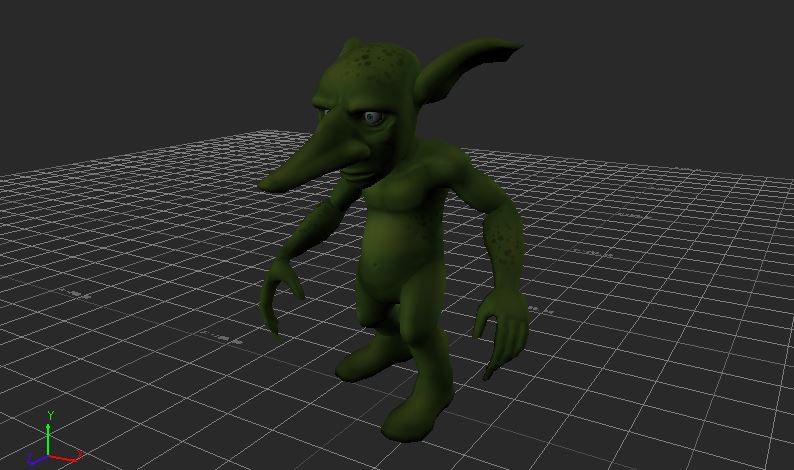
Officially the Big Game Project course started a dew weeks ago but unofficially work for many students began several months ago by way of the ”Road to GGC” As it was called which presented an opportunity for students who wanted to prepare for BGP early. A lot of time in my group was spent going back and forth between various concepts, many of them seeming like they could be interesting and worthwhile one day only to look unimpressive, boring or impossible to see through to their completion due to time restrictions or lacking knowledge. Eventually however we decided on the concept of Goblin Doctors, a name that is rather telling of what the game is about and what the player does in it, namely take on the role of a goblin who is a doctor. The concept derived from an idea of a more realistic setting taking place in a hospital. However, upon deciding that the setting seemed a bit dull we changed it towards a more fantasy esk theme and aimed to go for a less serious tone. Once the concept was decided upon we began the work of actually fleshing out what the game play should center around. Some general thoughts and goals was to make it a fast paced, light-hearted experience which players could get into without having to dedicate much time or effort, a so called ”party game”. We aimed to have the game center around a cooperation element, meaning that we wanted our players to have to work together as much as possible. As for the actual game and what the setup revolved around a general summary of it is that it is a 2 player cooperation game where the players work together in their role as goblin doctors to help and heal as many orc patients throughout a level, which we decided to make roughly fifteen minutes long. As for game play mechanics we wanted to focus on three major ones, those being the use of a stretcher with which to move the patient about, an axe to amputate damaged limbs on the patient and a pair of pliers with which to pick up and fasten a prosthesis as a replacement for said removed limbs. After some feedback from fellow students and teachers we also added a mechanic for crafting new prosthesis from resources found around the games environment. When the process of making the game moved from a theoretical design phase to actual production i encountered some difficulties. The player character of our game had been designed and produced as a rigged mesh, meaning a 3d model with a skeleton used for animating said model, in an earlier course.
Most of previously mentioned issues were encountered when the need arose to start sharing files and keeping track of what version was the correct one between the groups members. This can result in quite a lot of trouble if not dealt with properly from the start, something we as a group did not do. This lead to asset files seemingly going missing and old, incorrect ones being used without the knowledge of the group members. When these errors were detected it most of the time became obvious that we would have to redo quite a lot of work, sometimes, in extreme cases, even to the extent of redoing some assets from the ground up. At this point however most of those issues have been resolved. The general confusion and issues we encountered made it clear that we needed to rethink our approach to the administration of the project and its assets.  |