Puzzles
|
Basing off what I said in my previous blogpost, not having the player spamming a projectile to see has given us a breath of fresh air to the project. We now have a plan for what we want the game to be, which in turn has led to a lot of great design discussions with positive outcomes. Our gameplay design has now turned into one where the player is traversing a large environment, which is divided into rooms. The rooms are different from eachother and serve different mechanical purposes. The way we are doing this is by having the rooms being connected in a way. For example, an object obtained in one room is used to do something in another room, or by doing a specific thing in one room the player affects the state of another room. What we internally are saying is that our game is now based on puzzles. One more concrete gameplay design we have started implementing is the following. In a room, there’s a plant shooting projectiles in a specific direction, blocking a path by doing so. These projectiles hurt the player if it hits them. 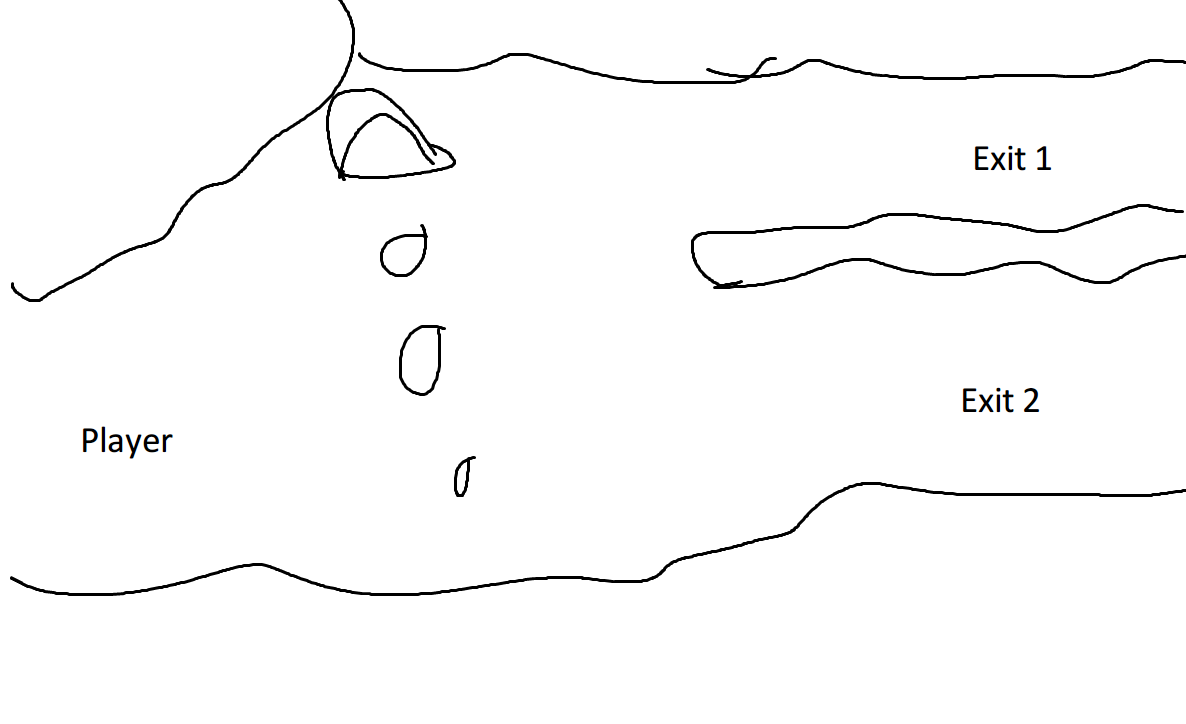
Room example where the plant is shooting the floor. However, if the player shoots an object at the plant, the plant gets stunned for a few seconds and then goes into an enraged-mode, shoots slightly faster and towards the player instead. When the player first enters the room they might not care where the plantshooter shoots, as long as it is not hitting the player. But if the player makes the plant shoot in a specific direction, it opens up other possibilities in the game. 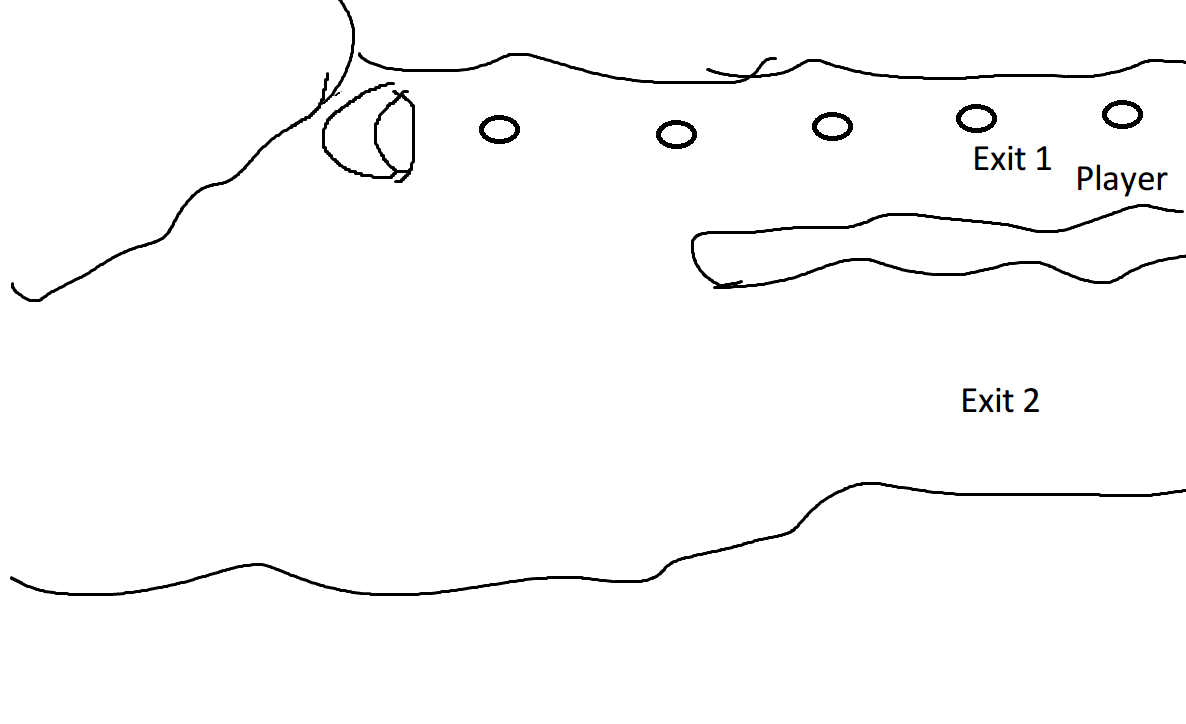
Room example where the player has interacted with the plant and made it shoot towards another room entrance. For example if the player directs it to a dark room, that room gets lit (the provides light for the room). Another idea we have is that if the player directs it to another room, the projectile flies into sticky moss on a wall. That then changes the state of the projectile to a non harming one, and the player can pick it up and use it to shoot/throw at a boulder to break it. The specifics around these examples are not that important, since they are not set in stone. But the general gameplay design about making the game around small puzzles is now something we believe in, and also believe that we can implement. The project has also become a lot more fun to work on! Not to say that there are no risks with the new design. It feels very late in the course to come up with “the fix for making the game fun”, and I’m personally worried that if we do not give good clues/hints or show off the different types of interactions, the player might easily get stuck in the game. We will have to be very smart in how we design our stuff, and we will have to do some proper playtesting!  |