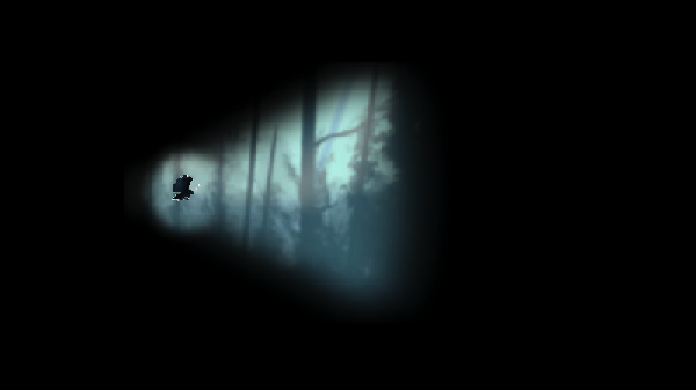
In the beginning, you know nothing.
|
In the beginning, you know nothing. For our current game project, this is equally true for both the player and for the designers. Our, as yet untitled, game lets the player take control of a moth, flying through a forest at night. Obstacles need to be navigated and enemies avoided in order to reach the goal: A light at the end of the level. However, the player can only see what is in a small part of the screen directly around them, with the ability to shoot a “cone of sight” to extend it.
As the lead designer on the project, part of my job is to determine exactly how this will work. Which is easier said than done. The basic idea is simple enough: Press a button, and a part of the screen is revealed. That leaves a number of questions, including:
All of these lead to more questions, and most (if not all) tie in with each other. Not to mention tying in to other aspects of the game, such as movement. So how to start answering them? The first thing I’ve learned from starting to test is what must be determined first. The answers rely on the answers to the questions before, and each answer also seem to lead to new questions that we hadn’t even thought about. So new obstacles are revealed and navigated, in a constant loop,  |