Motion Capture for Games, Reflective Blog 02
|
This is a report on the first part of Assignment 2 for the Motion Capture course. For Assignment 2, we have been tasked to record a motion capture shoot, clean the data, and then import the data into MotionBuilder. In this post I will reflect on the shoot I did together with Björn Berndtsson.
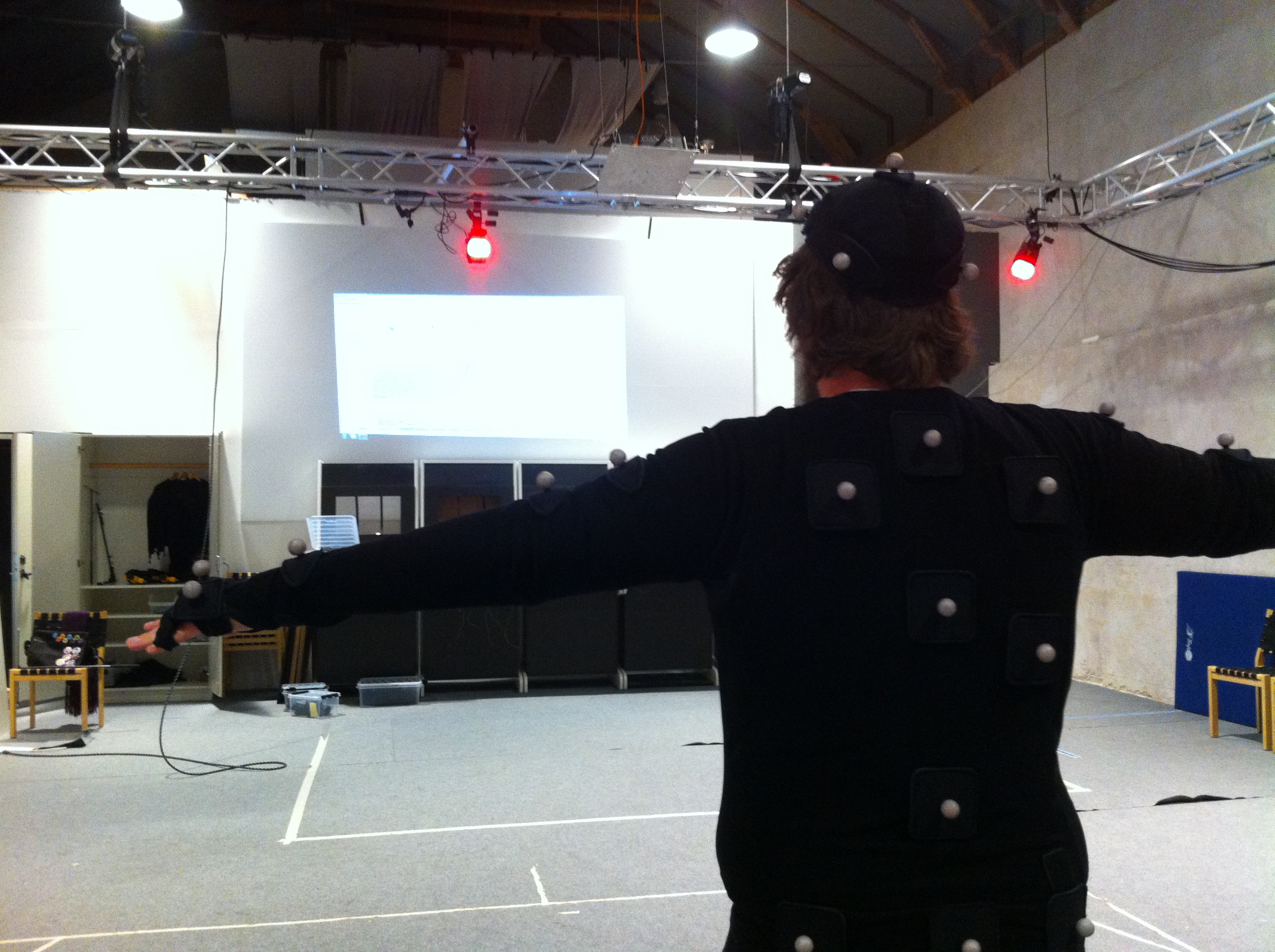
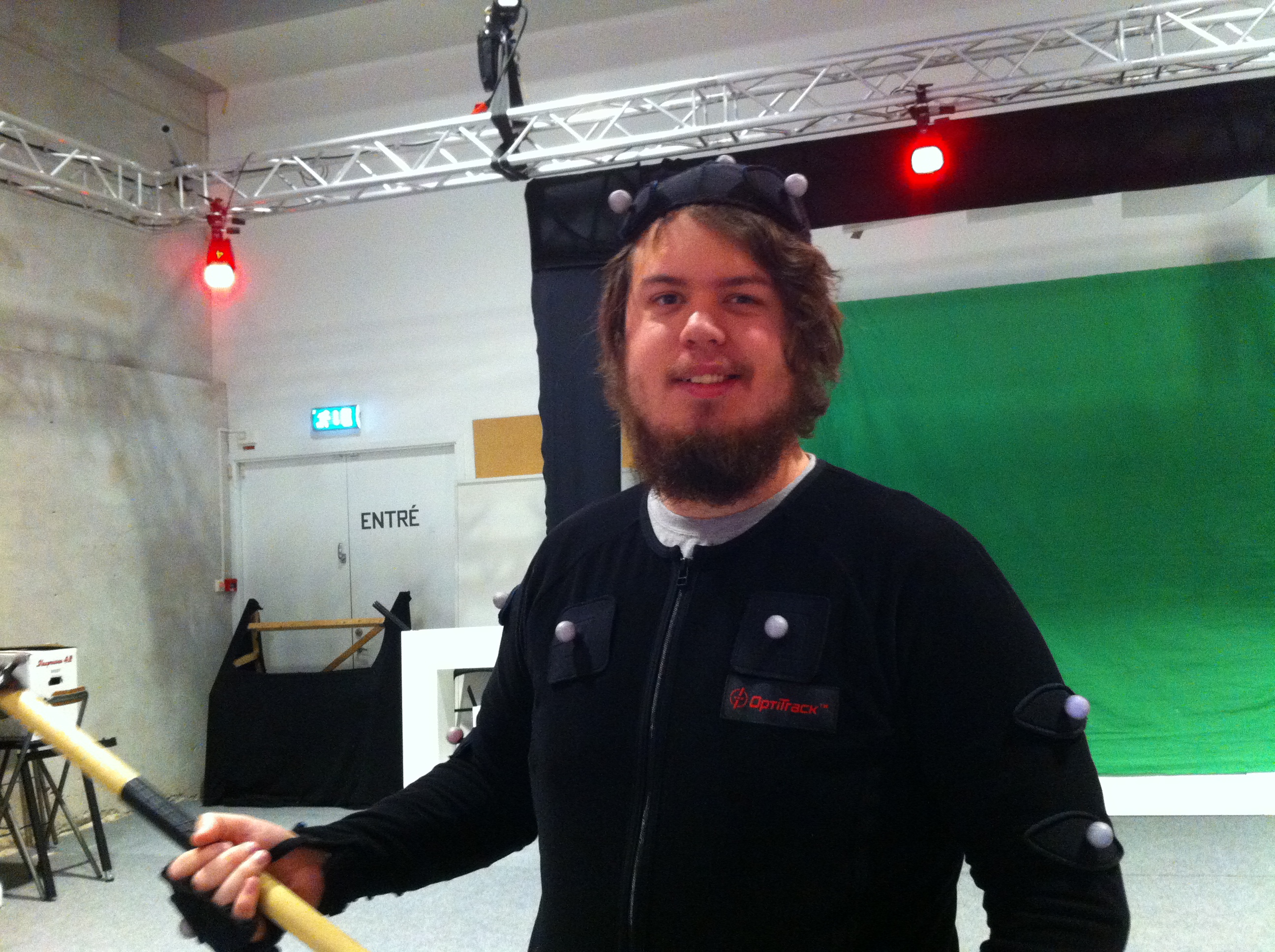
We were assigned to do 6 takes for this assignment. Along with the assignment instructions, we received three different shootlists with example takes we could choose to record. We were also allowed to write up our own shootlist with 6 takes, but me and Björn decided to follow one of the example shootlists. The shootlist we chose involved takes with an actor holding a staff in three idle poses, as well as swinging it in three different attacks. As I arrived early to the studio, and Björn had volunteered to be actor for the shoot, I turned on and calibrated the equipment myself. We’d previously been shown which switches to flip in the studio to turn everything on, as well as how to calibrate in Cortex, so this went without problems. Placing all the markers on the actor took some time as I hadn’t done it all by myself before, but all markers were put in their correct spots thanks to consulting of our coursebook and photographs I’d taken of actors from lessons throughout the course.
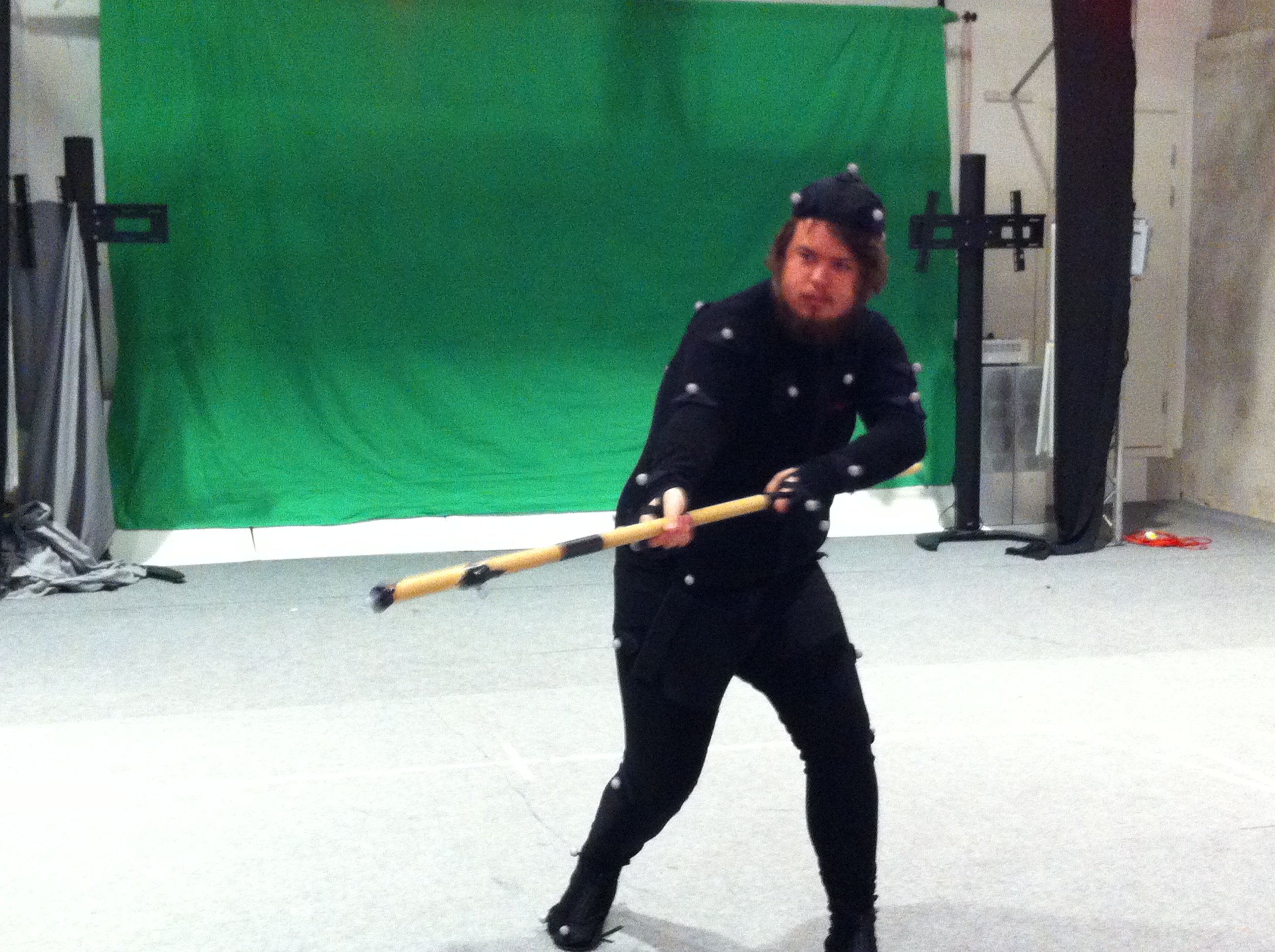
Before we started recording our takes, I went through the shootlist with Björn. The list included 6 takes. One relaxed idle with the actor just holding the staff, and a variation which was to start and end on the same pose as the relaxed idle, where the character looks bored, looks around and leans on the staff. Also included was a readied idle, where the character holds the staff ready to strike, and three different attacks building off that idle take, one strike forward, one to the right, and one in an arc.
We handled the attacking takes similarly. We took some time to let him find a comfortable idle pose which felt natural to stand still in, and worked well with transitioning to all three different attacks. I let him practice every different attacking swing several times to get the movements down, making sure he never shifted from the idle position or changed his grip on the staff. After we’d settled on how he was to perform each take, I quickly went down the list with him again asking him to repeat the motions, to make sure he was good with practice. After that, recording went smooth for the attacks. 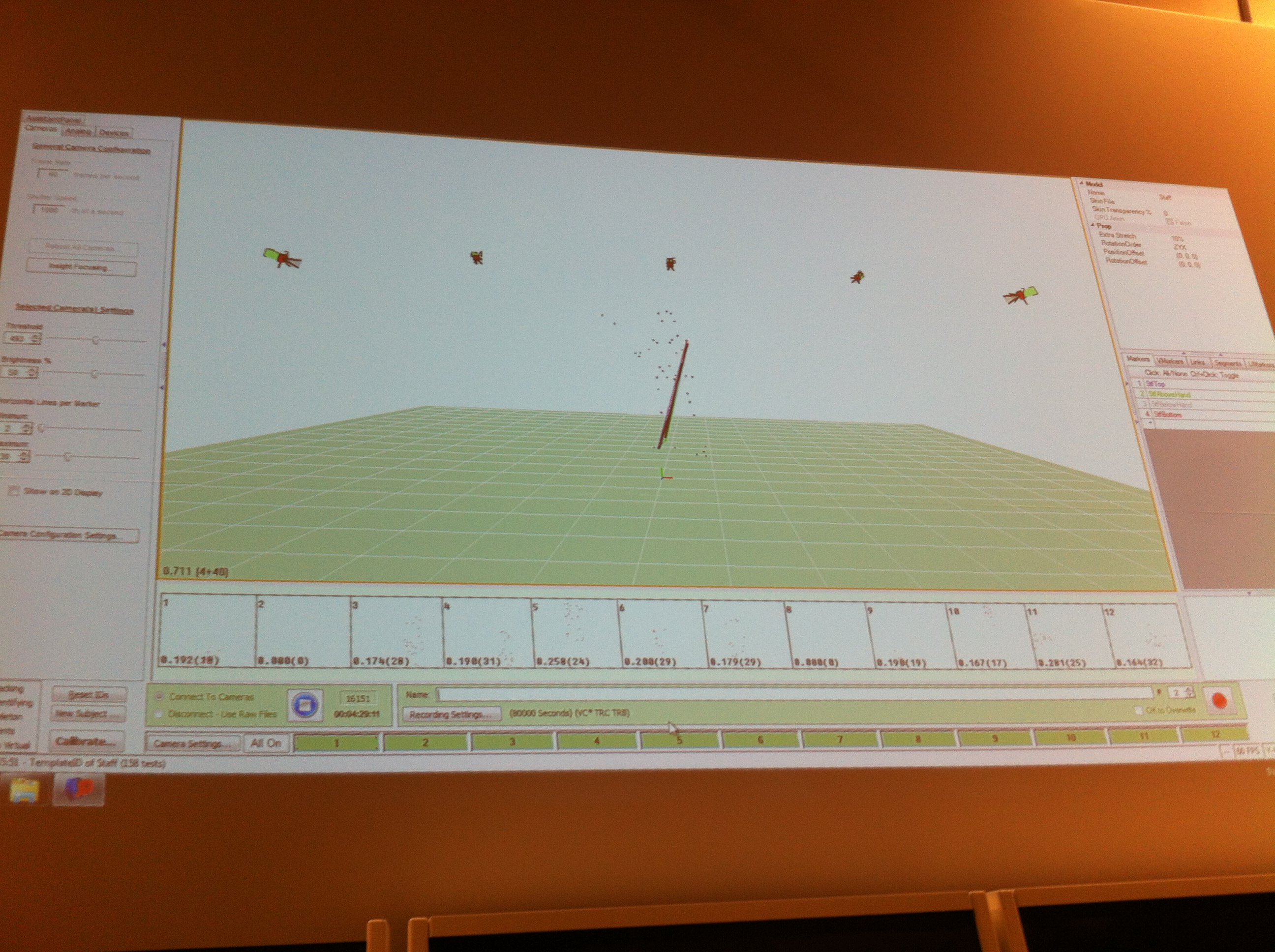
The staff template would randomly show up inside of Björn’s body, but the actor template was nowhere to be found. One technical problem we experienced on site was that we couldn’t get Cortex to assign the actor or staff template properly to the markers when recording. We tried to find a solution in the coursebook, and the several different menu options in Cortex, but after some time of not being able to fix the problem, we decided to leave it. We didn’t want to accidentally change any settings on the studio computer, and we knew it wouldn’t be a problem to just reassign the markers while cleaning the footage. Other than Cortex not displaying the staff and actor templates, we didn’t experience any problems during recording. However, when I started cleaning our footage in the week following the shoot, I noticed that during some of the attacking takes, Björn swung the staff too high for the cameras to catch some of the markers at some points. While I managed to reconstruct these misses after the fact, we should’ve done a better job paying attention to the markers while in the studio. Thankfully, there were no other major instances of markers disappearing.
The only real oversight we did during our shoot was that we didn’t pay enough attention to the markers in our takes, and ended up missing some disappearing markers. It’s important to go back through your recording and make sure you don’t have too much occlusion or markers going outside the recording area. While I believe we took it for granted that recording would go without problems since our list included many idle poses, it’s particularly important to pay attention in takes with extreme actions, such as an actor swinging around a long staff. |